

How to Choose Window Shutters for South-Facing Rooms
Last Updated: October 29, 2026
Quick Summary
Choose window shutters for south-facing rooms by prioritising louvre control, so you can cut glare at 2pm in June and still let in warmth and light at 10am in December. Full-height plantation shutters give the most control, and engineered hardwood holds its shape and colour under sustained sun.
Full-height shutters cover the whole window and give louvre control top to bottom.
Café style covers the lower half only, so glare remains in the brightest part.
Tier-on-tier lets you open the top for morning light and close the lower against afternoon glare.
Engineered hardwood is the strongest choice for large south-facing panels.
Dust louvres with a microfibre cloth and never soak engineered hardwood or MDF panels.
Table of Contents
Why South-Facing Rooms Need Different Window Shutters
Window shutters for south-facing rooms are not simply a style choice. They are a functional requirement, because a south-facing window in Scotland takes the brightest, longest and most intense sun of any window in the house. This guide explains how to choose shutters that manage that light without turning the room into a greenhouse or a cave.
The physics is straightforward. A south-facing window collects direct sun for most of the day, and in a well-insulated modern home that heat has nowhere to go. Older Scottish properties add their own complications: single-glazed sashes, deep stone reveals and uneven plaster around the opening. Shutters that work beautifully on a north-facing bedroom wall can warp, fade or jam when they face the full arc of the southern sky.
What most guides miss is that the problem is not brightness. It is control. A south-facing room needs coverings that can cut glare at 2pm in June and still let in warmth and light at 10am in December. Fixed blinds and flimsy roller shades struggle with that range.
Below, we break down the shutter types, materials and installation details that actually suit a sun-facing room, and the mistakes that cost homeowners money.
The Benefits of Shutters in a Sun-Facing Room
Shutters can give a south-facing room precise louvre control, a fixed frame that does not flap or sag, and a barrier that sits close to the glass where the heat arrives.
The practical advantages stack up quickly:
Louvre control: tilt the slats to block direct glare while keeping the room bright, or close them fully for a dark, cool afternoon.
Privacy on demand: street-facing south windows are exposed on both counts, and shutters let you open the top section for light while keeping the lower half private.
Which Shutter Types Suit High Sun Exposure
Full-height plantation shutters are a strong all-round option for a south-facing room, because they cover the whole window and give you louvre control top to bottom. Café style and tier-on-tier designs suit specific situations, and the right pick depends on how you use the room and how exposed the window is.

Full-Height, Café Style and Tier-on-Tier Compared
Each style handles sun differently, and the trade-offs matter more on a south wall than anywhere else in the house.
Style | Coverage | Best for | Watch out for |
Full-height | Whole window, floor to top | Living rooms, bedrooms, maximum light control | Needs a clear reveal for the frame |
Café style | Lower half only | Street-facing windows where you want privacy with light above | Top half stays uncovered, so glare remains |
Tier-on-tier | Independently adjustable sections | Rooms used differently morning and evening | More panels means more to clean and align |
Full-height gives the most control and the cleanest look on a tall sash window. Café style works well where the priority is privacy from the street rather than glare, but it leaves the brightest part of the window open. Tier-on-tier is the flexible option: open the top tier for morning light, close the lower tier against afternoon glare. For a deeper comparison of how each style handles glare and privacy, our guide to the best window shutters for privacy and light control covers the detail.
UV Protection for South-Facing Windows
UV protection for south-facing windows comes down to blocking direct sunlight before it reaches your furnishings, and shutters do this better than most alternatives because a closed panel creates a solid physical barrier at the glass.
Fabric fades, leather cracks and wooden floors silver over time when strong sun hits them day after day. A south-facing room accumulates that damage faster than any other room in the house.
Material choice affects UV performance as much as louvre position. Engineered hardwood and quality PVC hold their colour and shape under sustained sun, while cheaper composites can yellow or bow. If a window gets direct sun for most of the day, it is worth choosing a material rated for that exposure rather than the cheapest option on the quote.
Choosing Materials That Handle Heat and Light
Material selection is where south-facing rooms separate the good installations from the ones that fail. Heat and UV are a tough combination, and not every shutter material handles both equally well.
Here is how the main options compare in practice:
Engineered hardwood: stable under heat, holds shape and colour well, and the strongest choice for large south-facing panels.
Solid hardwood: beautiful and durable, but heavier and more sensitive to humidity swings, so it needs a stable room environment.
PVC and composite: moisture-resistant and low-maintenance, good for kitchens and bathrooms, but quality varies widely and cheap versions can discolour in strong sun.
MDF: affordable and smooth, but the least suited to sustained heat and moisture, so it is best kept to shaded windows.
If you are unsure which material suits a particular window, ask for advice at the measuring stage rather than guessing.
Energy Efficient Window Coverings for Highlands Homes
Older, drafty properties in exposed locations can lose heat quickly, and a south-facing window can gain heat just as fast.
The effect depends on the window and how well the frame fits the reveal.
For homeowners weighing up the wider picture, our guide to energy efficient window shutters in Scotland covers related considerations.
Fitting, Maintenance and Shutter Installation Lead Times Glasgow Homeowners Can Plan Around
Shutter installation lead times depend on the supplier's process, and the range across the market is wide.
At Caledonia Shutters, we run design, manufacture and fitting through one in-house team, and our lead times are among the fastest in Scotland.
Maintenance is minimal once installed. Dust the louvres with a microfibre cloth, wipe marks with a damp cloth, and check the tilt mechanism occasionally. Watch out: never soak engineered hardwood or MDF panels, because excess moisture is what causes swelling and sticking. A dry or barely damp cloth is all you need.
For a detailed breakdown of what drives timelines across the UK, read our guide to fast lead time internal shutters. If you are searching for shutter installation near me in Glasgow, our team covers the city and surrounding areas, and you can see how the process works on our internal shutters Glasgow service page.
Book a Home Survey and Get Your South-Facing Windows Measured
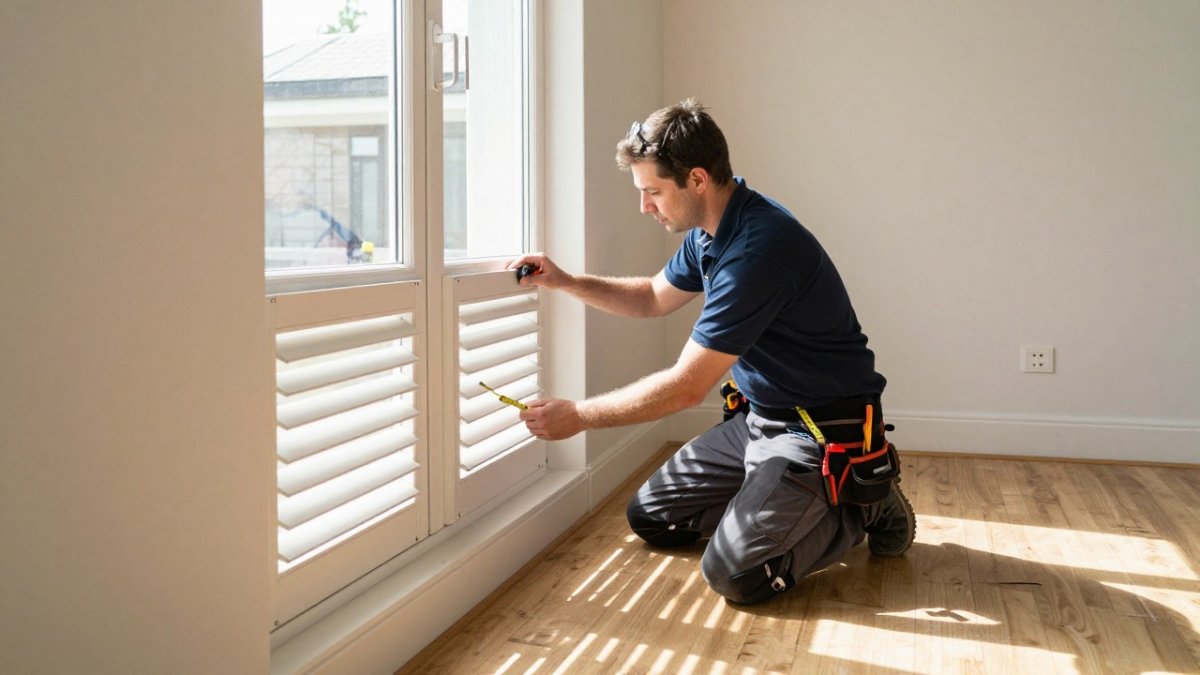
Accurate measurements of your actual windows matter for any shutter fit, and a survey is the way to take them.
During a home survey, we measure your windows. Pricing depends on quantity, dates, and delivery; see our pricing page for current prices or a quote. For current prices or a quote, visit our pricing page.
Book a survey with Caledonia Shutters and get made-to-measure shutters fitted by our own in-house team, with coverage across Scotland including the Highlands and Islands.
Frequently Asked Questions
Do south-facing rooms get too hot in the UK?
They can. A south-facing window takes the strongest direct sun of the day, and in a well-insulated room the glass acts like a radiator, so temperatures climb through the afternoon. The fix is controlling light at the glass rather than trying to cool the room afterwards.
Are plantation shutters effective at blocking heat?
How much difference you notice depends on the window, the material and how you use the louvres through the day.
Do window shutters help with energy efficiency in Scottish homes?
Shutters can be used alongside other measures such as draught-proofing around the frame, depending on the property.
Can shutters protect furniture from UV damage in south-facing rooms?
Yes. UV protection for south-facing windows matters because prolonged direct sun fades upholstery, wooden floors and artwork. Closing or tilting louvres during peak sun hours can reduce how much direct light reaches your furniture.
Comments