

Pros and Cons of Motorised Window Shutters
Last Updated: October 23, 2026
Quick Summary
Motorised window shutters suit tall, hard-to-reach and street-facing windows, letting you tilt louvres by remote, app or schedule. They cost more than manual shutters, need a power source and specialist repairs, so they make less sense for small windows you can reach comfortably.
A motor removes the stretching, step stools and long rods manual shutters need on high or awkward windows.
Battery life typically runs from several months to a couple of years per charge, depending on use and motor quality.
Battery motors usually cause less disruption in period homes, while hardwiring suits new builds or rooms being renovated.
Ask for a full quote covering supply, fitting and any electrical work, as a low headline figure may exclude wiring.
Scheduling and group control are the smart features most households actually use; the rest is novelty.
Table of Contents
Motorised Window Shutters: The Honest Pros and Cons
The Main Advantages of Motorised Window Shutters
Effortless Operation for Awkward Windows
Better Privacy and Light Control
The Drawbacks You Should Know Before Buying
Motorised Shutters Cost UK: What Drives the Price
Motorised Shutters vs Manual Shutters
Motorised Shutters Battery Life and Power Options
Smart Shutters for Windows: Automation and Control
Conclusion
Frequently Asked Questions
Motorised Window Shutters: The Honest Pros and Cons
Motorised window shutters are internal window coverings fitted with an electric motor that tilts and closes the louvres at the push of a button, a remote, or a smartphone app. At Caledonia Shutters, we fit made-to-measure shutters across Glasgow and the wider region, and we have this conversation most weeks: are they worth the extra outlay over a manual set? Below, we break down the genuine advantages, the drawbacks nobody mentions at the showroom, and the cost factors that actually move the price.
The short answer: motorised shutters suit tall windows, hard-to-reach openings, and street-facing rooms where privacy matters. They make less sense for small windows you can reach comfortably. Everything else is detail.
The Main Advantages of Motorised Window Shutters
The biggest gain is control without effort. A motor lets you tilt louvres from across the room, set a schedule, or close the shutters without leaning over a bath or stretching behind a sofa. For awkward windows, that changes how you use the room.

Effortless Operation for Awkward Windows
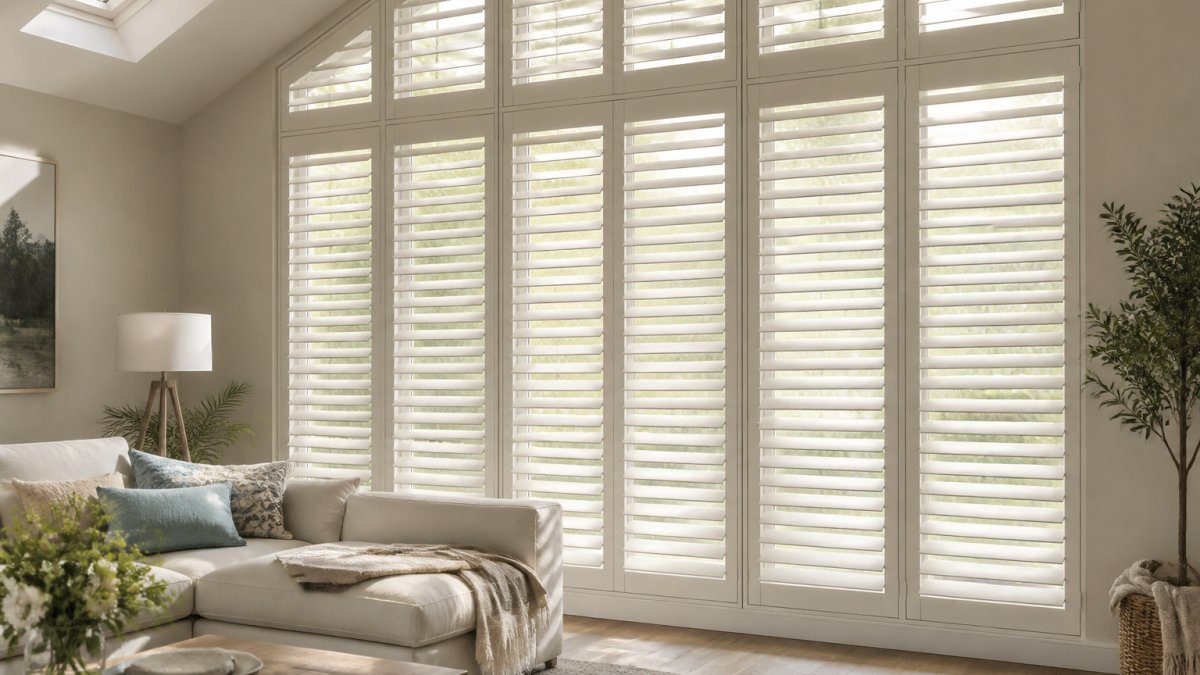
Period properties often have deep reveals, high sashes, or windows above stair landings. Manual shutters on these need a stretch, a step stool, or a long rod. A motor removes that entirely. For busy families and anyone with limited mobility, this is the feature that justifies the spend.
Better Privacy and Light Control
Street-facing windows in city centres benefit most. You can angle louvres for daylight while blocking the view in, and close them fully in seconds when you leave. Many systems also offer timed routines, so shutters close at dusk whether you are home or not.
Pro Tip Ask for a demonstration of the tilt range, not just open and closed. The best setups let you fine-tune the louvre angle in small increments, which matters far more day to day than the full-close function.
The Drawbacks You Should Know Before Buying
The honest downsides are cost, power, and repair complexity. A motorised set costs more than a manual one, needs a power source, and if a motor fails, the fix is a specialist job rather than a screwdriver. None of these are dealbreakers, but you should budget for them.
Higher upfront cost than manual shutters
Motor or battery replacement adds long-term maintenance
Wiring options can mean disruption during fitting
Repairs need a technician, not a DIY fix
Watch Out Skipping a site survey is the most common mistake. Awkward Victorian window shapes need measured templates, and a remote quote can leave you with gaps at the edges that no motor can fix.
Motorised Shutters Cost UK: What Drives the Price
Motorised shutters cost more than manual equivalents, and the gap comes from the motor, the control unit, and the wiring or battery housing. Pricing depends on window size, the number of panels, the motor type, and whether you need hardwiring or a battery option. We keep our pricing transparent and tailored to your budget, and you can see current figures on our pricing page rather than guesswork.
The variables that move the number most:
Cost Factor | What It Means | Effect on Price |
Window size and panel count | More panels mean more motors | Higher |
Motor type | Battery vs hardwired | Hardwired costs more upfront |
Control system | Remote vs app vs smart hub | Smart adds cost |
Access and fitting | Height, awkward reveals | More labour time |
Number of windows | Whole-house vs single room | Scales per unit |
For a fair comparison, ask for a full quote covering supply, fitting, and any electrical work. A low headline figure that excludes wiring is not a real price.
Motorised Shutters vs Manual Shutters
Motorised shutters win on convenience and privacy control; manual shutters win on price and simplicity. If your windows are easy to reach and you are happy adjusting louvres by hand, manual is the sensible choice. If you have tall, awkward, or street-facing windows, the motor earns its keep.
Feature | Motorised Shutters | Manual Shutters |
Upfront cost | Higher | Lower |
Operation | Remote, app, or schedule | By hand or rod |
Best for | Tall or awkward windows | Standard reachable windows |
Maintenance | Motor or battery checks | Minimal |
Power needed | Yes | No |
Repair complexity | Specialist | Simple |
Motorised Shutters Battery Life and Power Options
Motorised shutters battery life typically runs from several months to a couple of years per charge, depending on how often you operate them and the motor quality. Hardwired options remove charging entirely but need an electrician and can mean chasing walls in older properties.
Battery-powered motors are the practical pick for period homes where rewiring is disruptive. A rechargeable lithium pack slides out for charging, and a full charge generally lasts months in normal use. Hardwiring suits new builds or rooms already undergoing renovation.
Key Takeaway Match the power option to your property, not to the brochure. In a Victorian terrace, battery motors usually cause less disruption; in a new build with easy access, hardwiring is cleaner long term.
Smart Shutters for Windows: Automation and Control
Smart shutters for windows add app control, scheduling, and voice assistant integration to the motor. You can set shutters to open at sunrise, close at dusk, or respond to a scene command. For remote or hard-to-reach rooms, this is where automation pays off.
The practical benefits stack up:
Timed routines that mimic occupancy when you are away
Voice control through common smart home systems
Group control so one command closes every shutter downstairs
Integration with heating routines to retain warmth in winter
If you are weighing up smart shutters for windows against a basic remote setup, ask whether the app adds real value for your routine. For most households, scheduling and group control are the features that get used; the rest is novelty.
Conclusion
Choosing between motorised and manual shutters comes down to your windows, your budget, and how much you value effortless control. For tall, awkward, or street-facing windows, the motor is money well spent; for simple reachable windows, manual does the job.
At Caledonia Shutters, we design, make, and fit made-to-measure shutters across Glasgow and the wider region, with in-house fitting teams and lead times among the fastest available. We keep pricing fair and transparent, so you know the full cost before we start. Book a survey and we will measure your windows, talk through motor and power options, and give you a clear quote with no hidden extras.
Frequently Asked Questions
Are motorised window shutters worth it?
It depends on your windows and routine. Motorised window shutters earn their keep on tall, wide or hard-to-reach windows where manual rods are awkward, and for anyone who wants scheduled privacy and light control without lifting a finger. If you have small, easy-to-reach windows and a tight budget, manual shutters do the same job for less. Weigh the convenience against the extra cost of motors and controls, and factor in whether you already run a smart home system.
What are the disadvantages of motorised shutters?
The main drawbacks are upfront cost, a reliance on power or charged batteries, and more parts that can fail over time. Motors and remote controls add to the price compared with manual shutters, and you need to plan for battery changes or a wired supply. Repairs, if needed, are more involved than replacing a manual tilt rod. None of these are dealbreakers, but they are worth understanding before you commit, especially on large window runs.
How much do motorised shutters cost in the UK?
Motorised shutters cost more than manual equivalents because of the motors, controls and wiring or battery housings. The final figure depends on window size, the number of panels, the motor type and whether you choose smart home integration. Rather than quote a single figure, ask for a made-to-measure quote based on your windows. Caledonia Shutters publishes transparent pricing and tailors quotes to your budget, so you can see the breakdown before committing.
Do motorised shutters need to be plugged in or charged?
Both options exist. Battery-powered motorised shutters run on rechargeable packs and avoid trailing cables, which suits older properties where chasing walls is impractical. Mains-wired versions draw power directly and never need charging, but they need an electrician and a cable route to each window. Battery life varies with window size and daily use, so ask about expected charge intervals and how easy the packs are to access and swap.
Book Now!
Add caledoniashutters.co.uk as a preferred source on Google →

Comments