

7 Best Window Treatments for North-Facing Rooms 2026
Last Updated: November 22, 2026
Quick Summary
Sheer curtains and light-filtering roller blinds suit most north-facing rooms, while shutter blinds win on privacy and insulation and layered treatments solve tricky rooms. For north-facing rooms, diffusion beats blockage: every treatment that scored well lets light through in a controlled way. If you want one recommendation, choose shutter blinds for street-facing or period windows and light-filtering rollers for everything else.
Café curtains cover only the lower half of the window, giving street-level privacy while leaving the top open to the sky.
Tilting Venetian slats upward bounces pale daylight off the ceiling and deep into a north-facing room.
Day and night blinds combine sheer and opaque fabrics on one roller but have a bulkier headrail than a single roller.
Warm, pale colours such as soft white, cream, ivory, oatmeal or warm greige reflect cool daylight back into the room.
Shutter blinds and well-fitted thermal-lined blinds trap a layer of air between fabric and pane to slow heat loss.
Which treatment suits your north-facing room?
Made-to-measure shutters with fast lead times and in-house fitting across Scotland.
Table of Contents
The 7 Best Window Treatments for North-Facing Rooms Compared
Best Blinds for North-Facing Rooms: What the Comparison Shows
Shutter Blinds: Why They Suit Glasgow's Older and Street-Facing Windows
How to Make a North-Facing Room Brighter with Colour and Fabric
Window Treatments for Warmth and Insulation in Scottish Homes
Why North-Facing Rooms Need Different Window Treatments
North-facing rooms receive no direct sunlight, only cool, indirect daylight that shifts from soft grey in winter to a pale wash in summer. That single fact changes everything about how you dress the window.
The goal is not to block light but to bend it. Pale, light-filtering surfaces bounce what daylight there is deeper into the room, while heavy blockout fabrics swallow it.
Below, we compare seven options on light control, warmth and privacy, then show how to make a north-facing room brighter with colour, fabric and layering. Keep reading and you will know exactly which treatment suits your window, your room and your budget.
The 7 Best Window Treatments for North-Facing Rooms Compared
Here is the short answer: sheer curtains and light-filtering roller blinds suit most north-facing rooms, shutter blinds win on privacy and insulation, and layered treatments solve the tricky rooms. The table below summarises all seven.
Treatment | Light Control | Best For | Watch Out For |
Sheer curtains and café curtains | Soft diffusion | Living rooms, kitchens | Little privacy at night |
Light-filtering roller blinds and Roman shades | Adjustable diffusion | Bedrooms, studies | Fabric creases on Romans |
Venetian blinds with adjustable slats | Precise direction control | Home offices | Dust on slats |
Shutter blinds and plantation shutters | Tilting louvres, full control | Street-facing and period windows | Higher upfront cost |
Day and night blinds | Two fabrics in one | Dual-use rooms | Bulkier headrail |
Layered window treatments | Combined control | Large or exposed windows | More to clean |
Motorised and smart blinds | Timed, app-based control | Hard-to-reach windows | Needs power nearby |
1. Sheer Curtains and Café Curtains
Sheer curtains are the simplest fix for a dark north-facing room. A fine voile in soft white or ivory diffuses cool daylight across the whole wall, softening the grey without shutting it out.
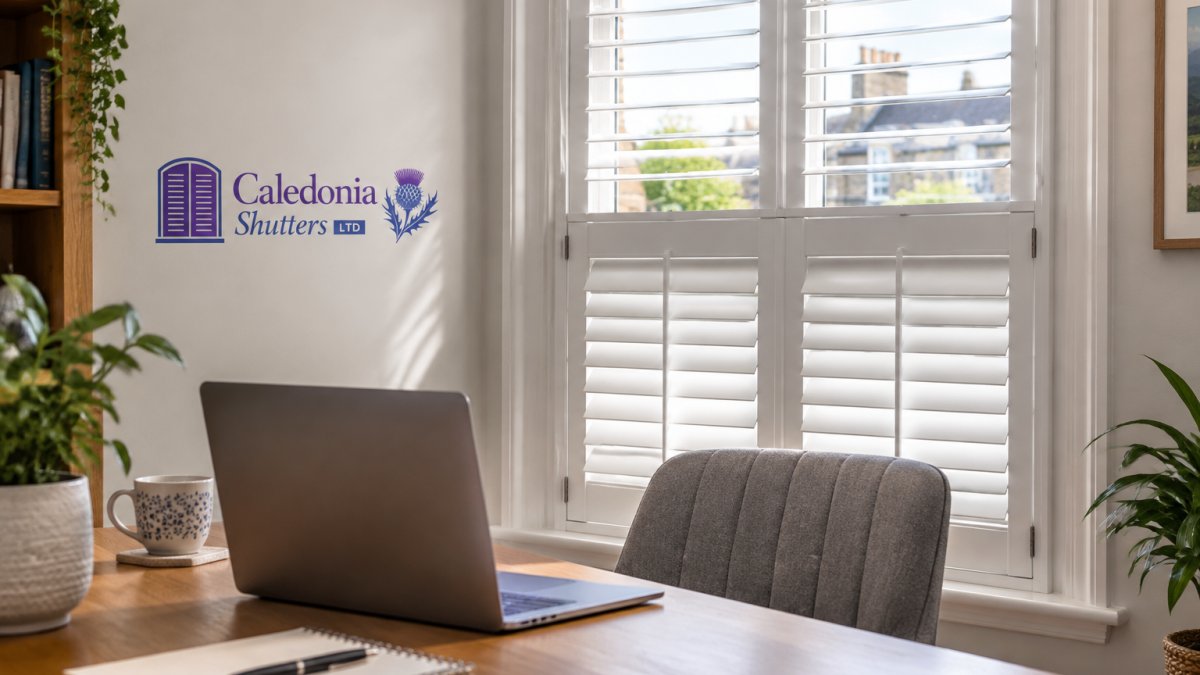
Café curtains cover only the lower half of the window.
Best for: living rooms and kitchens that need softness and privacy without losing light. Skip if: the room needs total darkness at night.
2. Light-Filtering Roller Blinds and Roman Shades
Light-filtering roller blinds are the practical workhorse for north-facing rooms. The fabric lets a gentle glow through while cutting glare on screens, and the flat surface suits modern and period windows alike.
Fabric opacity is the specification that decides the result. A light-filtering weave diffuses daylight; a dim-out fabric blocks most of it; a blockout fabric stops it entirely.
Best for: bedrooms, studies and any room where you want control without curtains. Skip if: you want the fabric to disappear completely when raised.
3. Venetian Blinds with Adjustable Slats
Venetian blinds with adjustable slats give the finest light direction control of any treatment. On a north-facing window, tilting the slats upward bounces pale daylight off the ceiling and deep into the room. Tilt them flat and the room darkens without closing the blind.
Real wood and faux-wood slats in warm neutrals, oatmeal, sand or taupe, keep the window from reading cold. Aluminium slats are cheaper and easier to wipe, which matters in kitchens.
Best for: home offices and rooms where glare on screens changes through the day. Skip if: you want minimal maintenance.
4. Shutter Blinds and Plantation Shutters
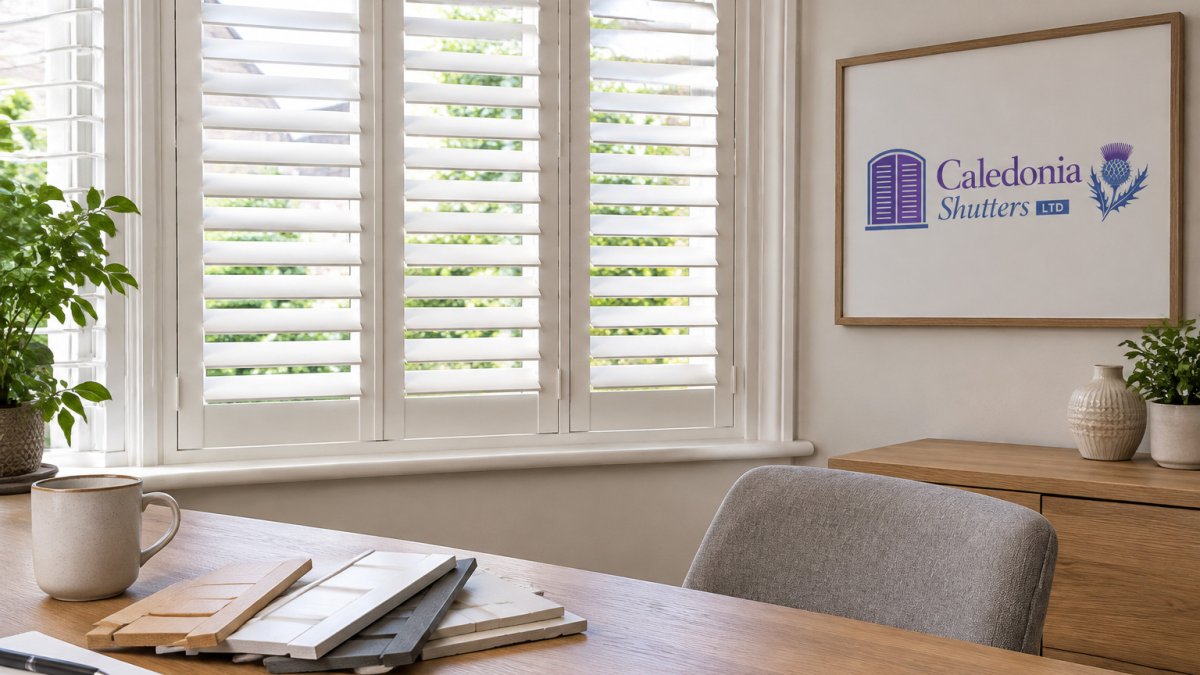
Shutter blinds are a strong all-round choice for north-facing rooms.
For period properties, made-to-measure shutters can suit awkward shapes that off-the-peg blinds may not fit well. Caledonia Shutters designs and fits in-house, and our made-to-measure service is built around your window.
Best for: street-facing windows, period homes and rooms that need privacy plus insulation. Skip if: your budget is tight and the window is a temporary fix.
5. Day and Night Blinds
Day and night blinds combine a sheer fabric and a opaque fabric on one roller, so you slide between them to switch from diffused daylight to privacy.
They suit dual-use rooms, a home office that becomes a guest room, or a bedroom used in the afternoon. The headrail is bulkier than a single roller, so check the recess depth before ordering.
Best for: rooms that need both daytime light and evening privacy from one fitting. Skip if: your window recess is shallow.
6. Layered Window Treatments
Layered window treatments pair two fittings, usually a light-filtering blind with sheer or full curtains, to solve a north-facing window that has more than one job. The blind handles glare and privacy by day; the curtains add softness, warmth and blockout at night.
Layering works best on large or exposed windows where a single treatment cannot do everything. It also lets you change the look seasonally: sheers in summer, a heavier curtain in winter.
Best for: large bay windows and rooms used morning to night. Skip if: the window is small or the wall space is tight.
7. Motorised and Smart Blinds
Smart blinds pair with home systems, so a north-facing room can warm up before you get home. The catch is power: most motors need a nearby socket or a rechargeable battery pack. If you are weighing motorised against manual, our guide to the pros and cons of motorised window shutters sets out the trade-offs honestly.
Best for: tall, awkward or hard-to-reach windows. Skip if: the window is small and easy to reach by hand.
Best Blinds for North-Facing Rooms: What the Comparison Shows
The best blinds for north-facing rooms are light-filtering roller blinds for simplicity and shutter blinds for control and insulation. Neither blocks daylight outright, and both let you adjust how much cool, indirect light reaches the room.
Three patterns stand out from the comparison:
Diffusion beats blockage. Every treatment that scored well lets light through in a controlled way.
Tilt and adjust win on flexibility. Shutters and Venetian slats handle changing daylight best.
Warmth comes from the fitting, not just the fabric. A well-fitted shutter or blind reduces draughts at the glass.
If you want one recommendation: choose shutter blinds for street-facing or period windows, and light-filtering rollers for everything else.
Shutter Blinds: Why They Suit Glasgow's Older and Street-Facing Windows

Glasgow's tenement flats and Victorian terraces bring two problems a north-facing room makes worse: tall bay windows that lose heat and street-level glass that needs privacy. Shutter blinds solve both. The panels sit tight in the reveal, cutting draughts, while the louvres tilt to block the view in without darkening the room.
The city's short winter days make light precious. A north-facing bay in a tenement gets only a few hours of pale daylight, so a treatment that reflects light inward, rather than absorbing it, changes how the room feels. White or warm greige louvres do exactly that.
How to Make a North-Facing Room Brighter with Colour and Fabric
The fastest way to brighten a north-facing room is warm, pale colour on the window: soft white, cream, ivory, oatmeal or warm greige. These shades reflect cool daylight back into the room instead of soaking it up.
Fabric choice matters as much as colour. Light-filtering linens and voiles diffuse daylight softly; heavy velvet and blockout weaves stop it. If you want curtains, choose an unlined or lightly lined sheer for the day and add a separate thermal layer for winter.
Three quick wins:
Paint the window wall a warm neutral so the frame blends and the light spreads.
Hang sheers from ceiling height to stretch the light down the wall.
Add a mirror opposite the window to bounce daylight deeper into the room.
Window Treatments for Warmth and Insulation in Scottish Homes
Scottish homes lose heat fastest through single-glazed and older windows, and a north-facing wall never gets the sun's warmth to offset it. The right window treatment adds a barrier at the glass.
Our comparison of shutters vs blinds for insulation explains which fitting keeps more heat in. For a deeper look at cutting heat loss and bills, our energy efficient window shutters Scotland guide covers the detail. The principle is simple: a tight-fitting treatment with an insulating layer beats a loose curtain every time.
Glasgow Measuring, Installation and Pricing Guidance
Accurate measuring decides whether a north-facing treatment performs as it should. A blind that is a few millimetres out leaves a light gap and a draught path. For a step-by-step method, our guide to measuring windows for shutters walks through recess, reveal and bay measurements.
Pricing depends on window size, treatment type and fitting. For current prices or a quote, see the Caledonia Shutters website. Installation across Scotland is handled by our own in-house fitting teams. If you are searching for internal shutters near me in Glasgow, we cover the city and beyond.
Book a Free Home Survey with Caledonia Shutters
Choosing a window treatment for a north-facing room comes down to light, warmth and privacy, and the right answer depends on your window. Glasgow homeowners can explore our internal shutters in Glasgow service to see lead times and options before booking.
North-facing rooms do not have to feel dim. With the right treatment, warm pale tones and a tight fit, you can turn cool indirect light into a bright, comfortable room. Caledonia Shutters offers made-to-measure shutters, fair and transparent pricing, fast lead times and in-house fitting teams across Scotland.
Frequently Asked Questions
Are shutters a good choice for north-facing windows?
Yes. Shutters give you the finest control over the flat, indirect light a north-facing room receives. Tilting the louvres upwards bounces daylight off the ceiling and pushes it deeper into the room, while closing them cuts glare on a street-facing window without blocking the whole opening. Solid panels and closed louvres also add a layer of insulation at the glass, which helps in older Scottish properties. Fitting matters most here, because gaps at the frame let both light and draughts through.
Which blinds let the most light into a north-facing room?
Sheer roller blinds and light-filtering roller blinds let through the most usable daylight, because the fabric diffuses rather than blocks it. Venetian blinds with adjustable slats run them close, since you can angle the slats to throw light upwards onto the ceiling. Avoid blockout and dim-out fabrics on a north-facing window unless the room is a bedroom, as they remove the small amount of daylight you already have. Pairing a sheer roller with a heavier curtain gives you both options.
What colours work best for window treatments in a north-facing room?
Warm, pale tones lift the cool blue-ish cast that north light carries. Soft white, cream, ivory, oatmeal, sand and warm greige all reflect light back into the room and stop it feeling grey. Warm neutrals work especially well on Roman shades and curtains, where a large fabric area has a big effect on the room's overall colour temperature. Save deep or cool-toned fabrics for south and west-facing rooms, where the light can carry them.
Can window treatments help keep a north-facing room warmer?
They can. Thermal linings on curtains and Roman shades, plus close-fitting shutter panels, reduce heat loss at the glass and cut draughts around older frames. The gain is largest in single-glazed or sash windows common in Scottish period homes, where a well-fitted treatment acts as an extra barrier. For the best result, ask for a made-to-measure fit so the treatment sits tight to the recess rather than hanging loose. Caledonia Shutters measures and fits across Glasgow and the rest of Scotland.
Comments