

7 Coastal Home Window Treatment Ideas for Scotland
Quick Summary
Coastal home window treatment ideas in Scotland include sheer linen curtains, woven wood shades, Roman shades, plantation shutters, cellular shades and moisture-resistant coverings. Choose sheer linen for light, plantation shutters for durability, and cellular shades for extra warmth, keeping fabric clear of cold glass to limit condensation.
Sheer linen curtains suit sunrooms and rear windows, while street-facing rooms need a blind or shade for privacy.
Double-cell shades trap two layers of still air, insulating better than single-cell versions on single-glazed sash windows.
Keep fabric 50-100 mm from the glass to reduce condensation behind curtains and blinds.
Wood and bamboo shades can warp in damp conditions, so keep them away from steamy bathrooms.
Measure every panel of a bay window separately, since each section can differ in width and angle.
Table of Contents
7 Coastal Home Window Treatment Ideas for Scotland
Last Updated: November 5, 2026
1. Sheer Linen Curtains for a Light, Airy Look
Coastal home window treatment ideas in Scotland often start with sheer linen. Homeowners often reach for lightweight fabric first because it lets daylight in without making a room feel exposed. Sheer linen curtains soften harsh light and hang loosely, which suits the relaxed feel of seaside interiors.

Linen and cotton are the fabrics most often recommended for coastal rooms. They breathe, they wrinkle in a way that looks deliberate, and they come in soft blues, greens and neutrals that echo the water and shoreline.
Sheer curtains work best where privacy is less of a concern, such as a sunroom or a rear window overlooking a garden. For a street-facing room, layer them with a blind or shade so you keep daylight without losing privacy at night.
Watch out: sheer fabric fades faster in strong sun. Choose a lining or a UV-treated fabric if the window faces south or west.
2. Woven Wood and Bamboo Shades for Natural Texture
Woven wood and bamboo shades bring natural texture into a coastal room. Their warm, organic finish sits well alongside pale walls, weathered wood and simple furniture. They also diffuse light gently, so the room stays bright without glare.
Woven wood shades are a popular option in coastal schemes, and they suit bay and standard windows alike, though very wide spans may need a supporting bracket to stop sagging.
Natural materials need a little more care than synthetic ones. Wood and bamboo can swell or warp in damp conditions, so keep them away from steamy bathrooms and check the fitting details before you order.
3. Roman Shades for Soft, Tailored Lines
Roman shades give a window a neat, structured look. When lowered they fall in soft folds, and when raised they stack into a compact band. That combination works well in coastal bedrooms and dining rooms where you want softness with a clean edge.
Choose a light, breathable fabric in a soft hue to keep the coastal feel. A lined Roman shade suits rooms that need light control, since the lining adds insulation and blocks more light than an unlined version.
Roman shades are a practical choice for a window that needs both style and light control. Measure carefully, because the stack height changes with the fabric weight and the shade type.
4. Plantation Shutters That Suit Scottish Coastal Weather
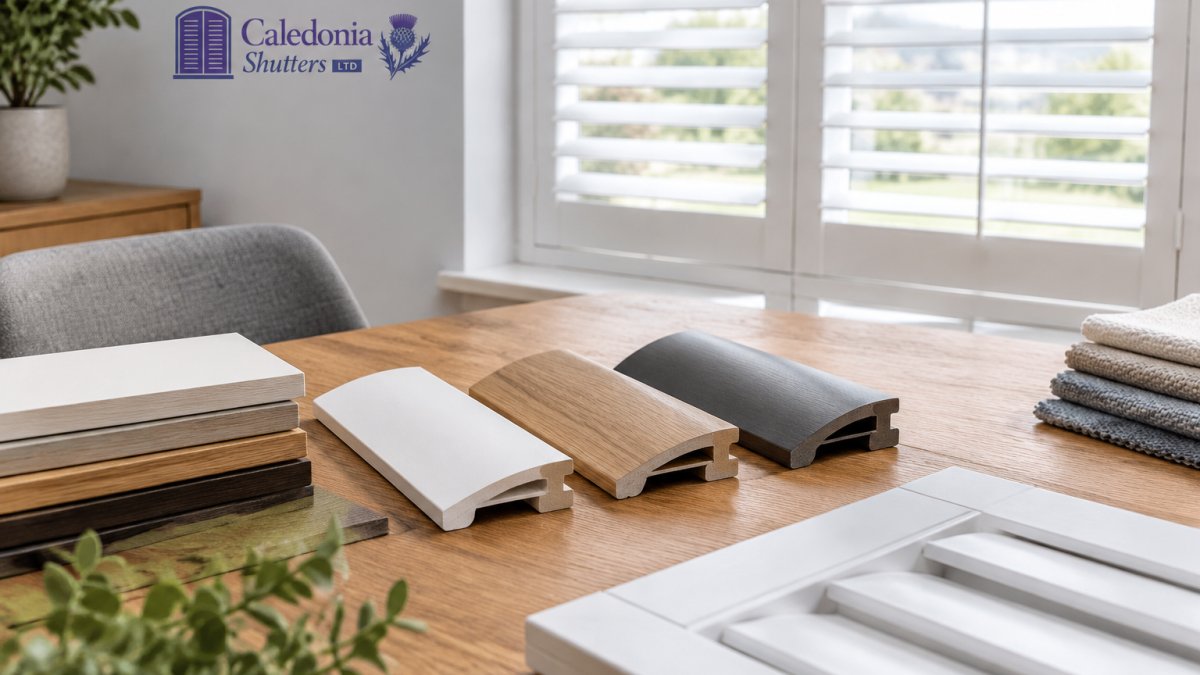
Plantation shutters can be a durable coastal window treatment. Their louvres let you control light and airflow, and a solid wood or painted finish can stand up well to damp air when it is properly sealed and maintained.
Many homeowners in Scotland choose plantation shutters for their clean, architectural look. Painted in white or a soft neutral, they suit both traditional and contemporary coastal homes. You can browse our Premium Plantation Shutters Scotland range to see the styles and finishes available.
Shutters can be wiped clean and do not rely on fabric that collects dust. It is worth checking the finish and the frame material before buying, especially for rooms that get steam from kitchens or bathrooms.
5. Cellular Shades to Improve Heat Retention
Cellular shades, also called honeycomb blinds, are often recommended for cold, draughty homes, and the reason is structural rather than decorative. The honeycomb cells trap a layer of still air between the room and the glass, and still air is a good insulator. A double-cell shade traps two layers, which is why it performs better than a single-cell version on a single-glazed sash window or a north-facing tenement wall.
The realistic gain is comfort rather than a transformed energy bill. A well-fitted cellular shade can reduce the cold downdraught you feel when sitting near a window and take the edge off heat loss through the glass, but it does not replace draught-proofing, loft insulation or double glazing. To see how shutters compare on energy efficiency, read whether plantation shutters are energy efficient. Treat it as one layer in a whole-flat approach: seal the frame, close the trickle vents only when the room is not in use, and line the curtains if you want a second barrier.
Fitting detail matters more than the marketing. A cellular shade mounted inside the recess, close to the glass, insulates best because it traps the air pocket right against the cold surface. An outside-recess mount covers more of the window and the frame but leaves a larger air gap, which is less effective thermally. An inside-recess fit is usually the better thermal choice, provided the reveal is square and deep enough for the headrail.
Lined, interlined curtains hung on a track that overlaps the wall insulate well and suit period rooms, but they are bulky and collect dust. Plantation shutters give good light control and a hard, wipe-clean surface. Cellular shades sit between the two in terms of neatness and warmth.
Choose a light colour in a coastal scheme so the shade keeps the airy look, and check the cell size against the window width. Wider windows may need a larger cell or a double-cell construction to avoid sagging, and some shades offer a top-down/bottom-up operating option that lets you keep daylight coming in at the top while blocking the view at street level. For a Glasgow flat overlooked from the street, that combination is often the most practical way to balance privacy and daylight.
Watch out: a cellular shade fitted loose in a deep, out-of-square Victorian reveal will leak air around the edges and lose much of its insulating benefit. Measure the reveal at several points and specify a side-channel or a snug inside mount before you order.
Cellular shades suit cold, draughty homes, and the key choices come down to cell type, mounting and fit, as summarised below.
Option | Best for | Key difference |
Single-cell shade | Basic warmth gain | Traps one layer of still air |
Double-cell shade | Single-glazed sash windows | Traps two layers, better insulation |
Inside-recess mount | Maximum thermal benefit | Sits close to cold glass |
Outside-recess mount | Full window and frame cover | Larger air gap, less effective |
Top-down/bottom-up | Privacy with daylight | Light enters from the top |
6. Bay Window Covering Ideas for Coastal Homes
Bay windows are a feature of many Scottish coastal homes, and they need a treatment that works across several panels. Consider a set of shutters with a central panel and tilting side panels, or a combination of sheer curtains at the centre with roller blinds on the sides for privacy.
Measuring a bay is more involved than measuring a flat window. Each panel can have a different width and angle, so take measurements for every section and check the depth of the reveal before ordering.
For bay windows that face the street, layered treatments give you the most control. A sheer curtain softens the view while a blind or shutter provides privacy at night.
7. Choosing Moisture-Resistant Coverings for Damp Coastal Air
Damp coastal air and driving rain are facts of life in Scotland, and window treatments are often the first place condensation shows up. The mechanism is simple: warm, moist indoor air meets a cold glass surface, condenses, and then drips or sits against fabric, wood or plaster. In Glasgow's older tenement flats and Victorian villas, single-glazed sash windows and deep stone reveals make that cold bridge worse, so the treatment you choose matters as much as the heating you run.
The first rule is to keep fabric clear of the glass. A curtain or Roman shade that hangs tight against a cold pane will wick moisture and, over a heating season, develop musty smells and mould along the hem and lining. A gap of at least 50-100 mm between the window surface and the back of the treatment, and a ceiling- or recess-mounted track that lets air circulate behind the fabric, can help reduce condensation. Where a deep reveal allows it, fit the treatment inside the recess rather than over it so the glass stays ventilated.
Material choice follows from that. For bathrooms, kitchens and north-facing bedrooms where condensation is persistent, sealed and painted plantation shutters, aluminium or faux-wood venetian blinds, and wipe-clean roller blinds can be lower-risk options. Wood and bamboo look superb in a coastal scheme but are hygroscopic: they take on and release moisture, which can cause warping, joint movement and surface mould if they sit against a damp reveal. If you want the natural texture, specify a sealed finish and keep the shade off steamy windows.
Ventilation is the other half of the fix. Trickle vents on modern units, opening sash windows a crack, and using an extractor fan in kitchens and bathrooms all reduce the indoor moisture load that ends up on the glass. Condensation often forms on the coldest single-glazed pane in a home; this is usually a ventilation and glazing issue, and no treatment will solve it alone. Wiping the glass and the window board weekly during winter, and checking behind curtains and blinds monthly, catches mould before it spreads into the lining or the plaster.
Watch out: heavy, unlined curtains in a bathroom or a north-facing bedroom are the classic Scottish condensation trap. If you cannot improve ventilation or glazing, choose a hard, wipe-clean treatment rather than a fabric one, and keep it clear of the glass.
Booking Your Made-to-Measure Shutters in Scotland
Made-to-measure shutters are a practical choice if you want a precise fit for an awkward window, such as a Victorian bay or a sash with a deep reveal. Caledonia Shutters designs and fits shutters in-house, which keeps the process straightforward from measurement to installation.
Pricing depends on the number of windows, the size and style you choose, and the delivery and fitting arrangements. For current prices and a quote tailored to your home, enter your sizes on the Shutterly Scottish price guide or visit our internal shutters pricing page to get started.
If you are in the Kelso area, you can see local availability and lead times for internal shutters before you book. Homeowners in Glasgow can also check lead times and availability for internal shutters in their area.
Book now and we will talk you through the options for your windows.
Frequently Asked Questions
What window treatments work best in a coastal home in Scotland?
Layered options usually work best. Sheer or linen curtains give the light, airy look many coastal homes want, while shutters or cellular shades add privacy, insulation and protection from wind-driven damp. Choose by room: bedrooms benefit from blackout or cellular options, while living rooms can carry lighter fabrics. Caledonia Shutters can measure and fit made-to-measure shutters across Scotland. Visit the website for current prices and a quote.
Are shutters a good choice for Scottish coastal homes?
Yes, shutters suit many Scottish coastal homes. They sit inside the window reveal, hold up well against humidity when correctly specified, and can be closed to limit draughts and heat loss. Materials matter: choose products designed for damp environments and check fitting carefully, especially in older properties where window shapes vary. Caledonia Shutters offers in-house design-to-installation service across Scotland, including the Highlands and Islands.
Which window coverings help keep a coastal home warm?
Thick, well-fitted coverings do the most. Cellular shades trap air in their layers, and solid-core shutters reduce heat loss through glazing. Lined curtains also help when closed at dusk. Good fit matters as much as material, because gaps let cold air in. Caledonia Shutters makes made-to-measure shutters, and pricing depends on the number of windows and the specification, so check the website for current prices.
How can I protect window treatments from damp coastal air?
Ventilate rooms regularly, avoid placing fabric treatments directly against single-glazed windows where condensation forms, and clean dust and salt residue off surfaces. Choose moisture-resistant materials such as engineered or solid timber shutters with a suitable finish, and synthetic or treated fabrics rather than untreated natural fibres near the glass. Good airflow around the window reduces mould risk.


Comments