

Are Made to Measure Shutters in Scotland Worth It?
Last Updated: November 4, 2026
Quick Summary
Made to measure shutters in Scotland are worth it because they fit the window that is actually there, closing the gaps at the edges that stock-size blinds leave in old sash windows, deep stone reveals and uneven plaster. A well-fitted shutter also adds a barrier layer against wind-driven rain and cold air and gives you control over heat loss and daylight.
Measure the recess width and height at three points and use the smallest figure for each.
A deep stone reveal of 150mm or more gives you room for a recess frame.
Faux wood costs less than real basswood and handles moisture better for bathrooms and kitchens.
Bay windows need each panel measured separately with the angles between them noted.
Professional installation brings a survey first so shutters are cut to the real opening.
Table of Contents
Why Made to Measure Shutters Suit Scottish Homes
Made to measure shutters in Scotland solve a problem that off-the-shelf blinds cannot: they fit the window that is actually there, not a standard size that nearly matches. Caledonia Shutters fits these shutters across Scotland, and the same three issues come up in many homes.
Scotland's housing stock is old. Sash windows, deep stone reveals and uneven plaster mean a stock-size blind leaves gaps at the edges. Gaps let in draughts and street light, and they look untidy from inside and out. Shutters cut and hinged to your exact opening close that gap.
The climate matters too. Wind-driven rain and cold air push against single-glazed windows for much of the year. A well-fitted shutter adds a barrier layer and, just as importantly, gives you control over how much heat escapes and how much daylight comes in.
Older properties, awkward windows and draughts
Victorian and Edwardian terraces, tenement flats and stone-built cottages rarely have a single square window in the house. Bay windows lean, arches curve, and sills sit at different depths room to room. A made-to-measure approach measures each opening on its own, so each shutter is cut to match.
Draughts are the complaint we hear most. A shutter that sits flush in the reveal, with a proper frame, blocks the cold air that whistles around a loose blind. For period homes with unusual shapes, our guide to shutters for awkward window shapes walks through the options in more detail.
Privacy and light control for street-facing windows
Ground-floor flats on busy streets face a real trade-off: you want daylight, but you do not want the pavement looking in. Louvred shutters handle this better than curtains. Tilt the slats up and you get light without the view in; tilt them down and the room goes private while staying bright.
For anyone weighing up the options, our comparison of shutters for privacy and light control sets out which styles work best for street-facing rooms.
Plantation Shutters in Scotland: Styles and Materials
Plantation shutters are a popular choice, and for good reason: the wide louvres give fine control over light and a clean, architectural look that suits both period and modern homes. Choosing the right style and material comes down to the window and the room.
Full-height, café-style and tier-on-tier options
Full-height shutters cover the whole window in one panel. Best for tall sash windows and living rooms where you want a uniform look.
Café-style shutters cover only the lower half. Ideal for street-facing rooms where you want privacy at eye level but full light above.
Tier-on-tier shutters split into independent top and bottom sections. Practical for bedrooms and bathrooms, where you open the top for air and keep the bottom closed.
Real wood, faux wood and basswood compared
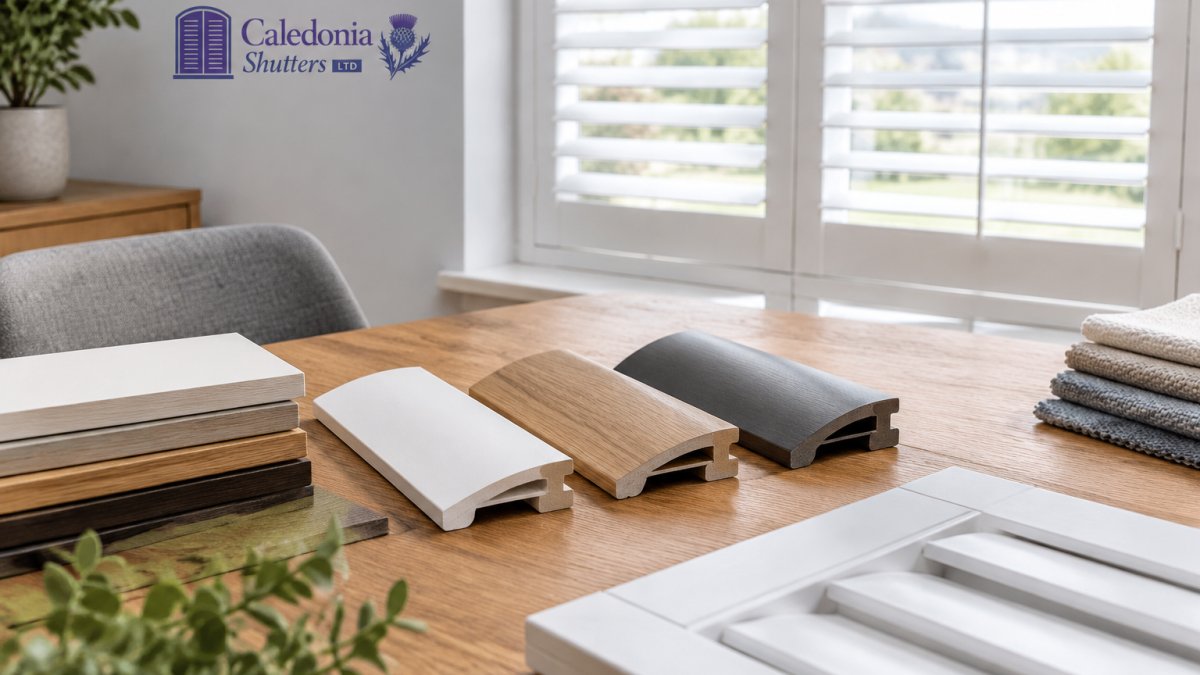
Real wood, usually basswood, gives the finest finish and takes paint and stain beautifully. It suits period homes where the shutter is part of the interior design. Faux wood costs less, handles moisture better and is the sensible pick for bathrooms and kitchens. Both are hard-wearing when fitted properly.
Here is how the main shutter styles and materials compare for Scottish windows.
Option | Best for | Key difference |
Full-height shutters | Tall sash windows and living rooms | Cover the whole window in one panel |
Café-style shutters | Street-facing rooms | Cover only the lower half |
Tier-on-tier shutters | Bedrooms and bathrooms | Independent top and bottom sections |
Real wood (basswood) | Period homes | Finest finish; takes paint and stain beautifully |
Faux wood | Bathrooms and kitchens | Costs less and handles moisture better |
How to Measure Windows for Shutters
Measuring is where most DIY orders go wrong, and it is the part of the job that Scottish windows make hardest. You need the width and height at three points in each direction, because old windows are rarely square. Measure the recess width at the top, middle and bottom, and the height at the left, centre and right, then use the smallest figure for each. Write the figures down in millimetres and keep them with a note of which window they belong to, because a tenement flat can have four different sizes in the same room.

Decide first whether you want a recess fit, sitting inside the opening, or a face fit, mounted on the wall. Recess fits look neater; face fits suit windows with shallow reveals or tiles that get in the way. For a recess fit, measure the width of the opening itself, not the glass, and check the depth of the reveal against the frame depth of the shutter you are considering. A deep stone reveal of 150mm or more gives you room for a recess frame; a shallow modern reveal of 60mm may not, and that is when a face fit becomes the sensible choice.
Measuring bay, arched and sash windows
Bay windows need each panel measured separately, and the angles between them noted so the frames meet cleanly. A three-sided bay is not three rectangles: the side panels are usually narrower and the angles are rarely a true 45 degrees, so measure each face at top, middle and bottom and note the angle with a protractor or by tracing the corner. Arched and shaped windows cannot be covered by a standard rectangular panel, so they need a template or a specialist survey.
Sash windows need a different approach again. Because the sashes slide, a recess fit can foul the movement, so most fitters use a face fit or a frame that sits clear of the sliding section. Measure the visible opening and note how far the sashes travel, then check that the shutter frame will not block the run. For period homes with unusual shapes, our guide to shutters for awkward window shapes walks through the options in more detail.
Watch out: measuring a bay or arch from a photograph or a rough sketch is the most common cause of a shutter that will not close, because the angle and the curve are the two things a tape measure alone cannot capture. If you plan to measure yourself, our step-by-step guide to measuring windows for shutters covers each window type before you order.
What Drives Shutter Prices in Scotland
Shutter pricing depends on quantity, dates, and delivery, so check the Caledonia Shutters pricing page or request a quote for current figures. You can also enter your sizes for transparent prices on our products. What most quotes do not show you is how those four things turn into a number, so here is the itemised logic we use.
Material. Faux wood is often the sensible pick for bathrooms and kitchens. Real basswood costs more than faux wood, and the material choice affects the final price.
Window size and configuration. Shutters are priced by the area covered and the number of panels. A full-height window in a Glasgow tenement might need two panels and a frame; a wide bay might need four or six panels plus angled frames. More panels mean more hinges, more tilt rods and more fitting time, so the price rises with the panel count as well as the area.
Style. Full-height, café-style and tier-on-tier are priced differently because they use different frame and panel builds. Tier-on-tier adds a mid-rail and independent top and bottom sections, which is more machining and more fitting time than a single full-height panel.
Survey and fitting. Pricing depends on quantity, dates, and delivery, so check the Caledonia Shutters pricing page or request a quote for current figures. Awkward fitting, uneven plaster, deep stone reveals, bay angles, shaped windows, adds labour because each opening has to be packed, scribed and checked.
Shutter Installation Times: What to Expect
Installation timing depends on the size and style of each window. Caledonia Shutters offers fast lead times thanks to its in-house design-to-installation process.
DIY Fitting vs Professional Installation
DIY fitting can work for a simple rectangular recess window in a modern home, if you are confident with a drill and the frame is square. It rarely works for period properties, bays or arched windows, where a small measuring error shows up as a gap or a sticking panel.
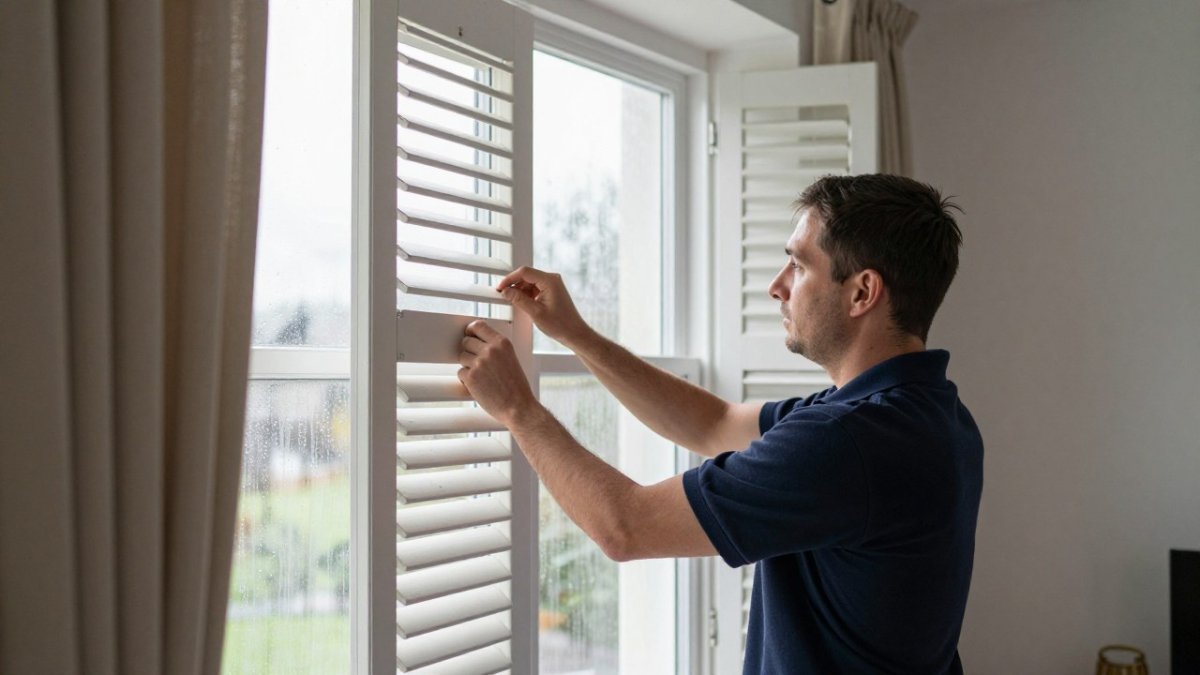
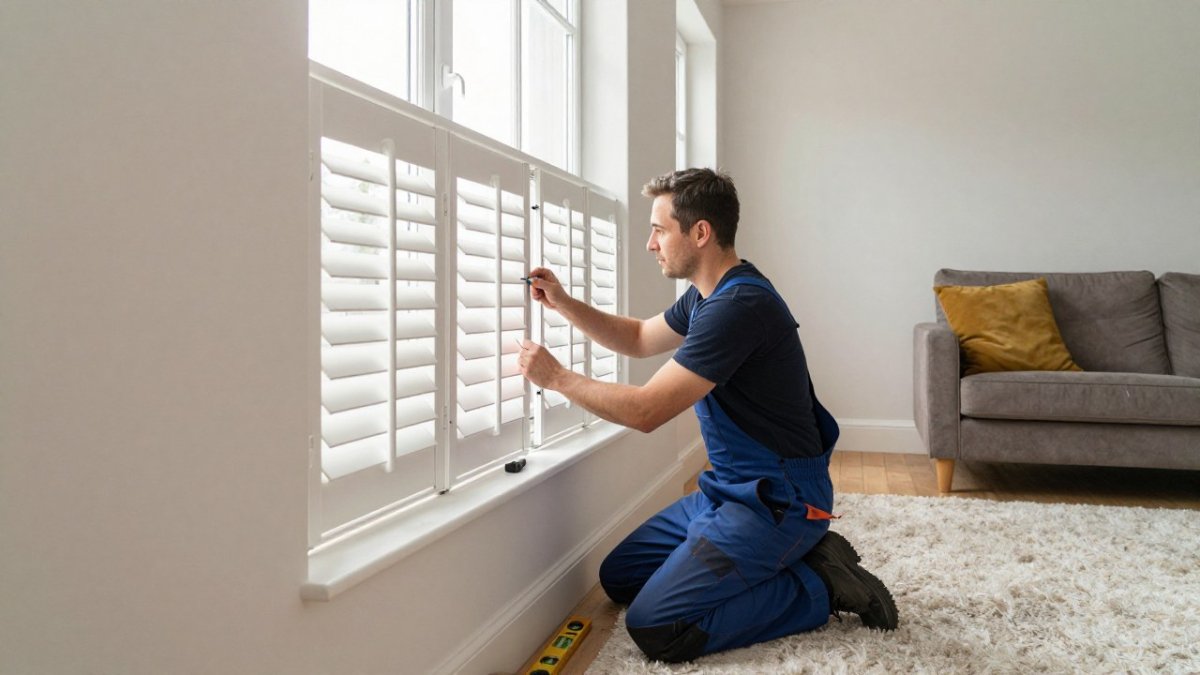
Professional installation brings a survey first, so the shutters are cut to the real opening, and a fitter who deals with the uneven walls and deep reveals that old Scottish homes throw at them.
Shutter Care, Repairs and Expected Lifespan
Well-made shutters last decades. Real wood needs an occasional dust and a wipe with a barely damp cloth; faux wood takes the same and shrugs off bathroom steam. Avoid harsh cleaners on painted louvres. Hinges and tilt rods rarely fail, and when they do, they are replaceable without replacing the panel.
Book Your Free Home Survey with Caledonia Shutters
The gap between a shutter that looks right and one that fits right comes down to the survey.
Our expert in-house fitting teams cover all of Scotland, from bustling cities to the Highlands and Islands. We offer transparent pricing tailored to your budget.
Ready to see what fits your windows? Book Now!
Frequently Asked Questions
How do made to measure shutters work?
Each panel is built to the exact dimensions of your window opening, so the frame sits flush with no filler strips or gaps. A surveyor records the width, height and depth of the recess, notes any out-of-square corners, and the panels are cut and assembled to those figures. Louvred slats tilt for light and privacy, and panels fold or slide back for full window access. Because nothing is trimmed on site, the finish stays clean and the shutters sit tighter against draughts than off-the-shelf blinds.
How do I measure a window for shutters?
Measure the width in three places, top, middle and bottom, and the height in three places, left, centre and right, then use the smallest figure for each. Measure the recess depth too, since the frame needs room to sit back from the reveal. For bay windows, treat each face as a separate opening and note the angles. Always measure in millimetres. A free home survey is still worth booking, as older Scottish properties often have uneven reveals that a tape measure alone will not reveal.
How long does it take to get shutters made and fitted in Scotland?
Lead times vary by supplier and by how busy the factory is. Caledonia Shutters runs its design and installation in house, which supports its fast lead times. Ask any company for a written lead time and a fitting date before you pay a deposit, and confirm whether the survey and installation are handled by their own teams or subcontracted.
Can shutters be fitted to bay windows and awkward shapes?
Yes. Bay windows are usually fitted with separate panels on each face, joined at the corners so the slats line up. Arched and shaped windows can take a fixed or specially shaped panel above the opening louvred section. The key step is an accurate survey, because deep Victorian and Georgian reveals are rarely square. A fitter who measures on site can allow for the angle of each face and any plaster unevenness, which is hard to capture from homeowner measurements alone.
If your windows are less than square and you want shutters that close the draughts and look right from day one, get started with Caledonia Shutters. Our free home survey, in-house fitting teams and Scotland-wide coverage mean you get measured, fitted and finished by the same people, whether you are in a Glasgow tenement or a Highland cottage. Book now and see the difference a proper fit makes.
Comments