

Best Shutter Materials for Humid Bathrooms
Table of Contents
Why Shutter Material Matters in Humid Bathrooms
Comparison Table: Shutter Materials for Bathroom Use
PVC Bathroom Shutters: Cost-Effective Moisture Resistance
Composite Bathroom Shutters: Durability and Appearance
Wooden Shutters in Bathrooms: Challenges and Solutions
How to Clean Bathroom Shutters and Maintain Moisture Resistance
Which Material Should You Choose for Your Bathroom?
Frequently Asked Questions
Last Updated: October 8, 2026
Why Shutter Material Matters in Humid Bathrooms
Bathrooms are the most challenging rooms in any home when it comes to window treatments. Moisture, steam, and condensation create an environment that destroys most standard shutters within months. The best shutter materials for humid bathrooms resist water damage, resist warping, and maintain their appearance despite constant exposure to damp air.
At Caledonia Shutters, we help homeowners across Scotland choose shutters that actually survive bathroom conditions. The difference between a material that lasts five years and one that lasts twenty comes down to moisture resistance and construction quality. This guide breaks down the real performance differences between materials, so you can choose shutters that won't deteriorate or warp in your bathroom.
The stakes are higher than aesthetics. Poor material choices lead to mildew, swelling, paint peeling, and structural failure. You'll either replace them repeatedly or live with shutters that look progressively worse. The right material choice eliminates that problem entirely.
Comparison Table: Shutter Materials for Bathroom Use
Material | Moisture Resistance | Maintenance | Durability | Best For |
PVC | Excellent | Minimal | 15-20 years | Budget-conscious buyers |
Composite | Very Good | Low | 20+ years | Long-term durability |
ABS Polymer | Excellent | Minimal | 15+ years | Maximum moisture protection |
Aluminium-Core Composite | Very Good | Low | 20+ years | Lightweight durability |
Natural Wood | Poor | High | 5-10 years | Traditional aesthetics only |
Faux Wood | Good | Moderate | 10-15 years | Wood appearance, better resistance |

PVC Bathroom Shutters: Cost-Effective Moisture Resistance
PVC shutters deliver genuine water resistance. They don't absorb moisture, they won't swell, and they resist mildew growth. For homeowners on a budget who need shutters that actually work in a bathroom, PVC is the practical choice.
The material's strength lies in its simplicity. PVC is essentially plastic. Water slides off it. No wood fibres to absorb dampness, no composite layers to delaminate. Clean them with a damp cloth and they stay looking new for years. Most PVC bathroom shutters require nothing more than occasional dusting and a wipe-down with mild soap and water.
Where PVC falls short is aesthetic refinement. It lacks the warmth of wood and the sophisticated finish of premium composites. The surface can feel hollow, and the colour range is limited. If your bathroom has character, Victorian tilework, period fixtures, architectural details, PVC shutters may feel out of place. For modern bathrooms with clean lines and contemporary fixtures, they blend seamlessly.
Installation is straightforward. PVC is lightweight compared to wood or heavy composites, so fitting is quicker and less disruptive. For homes across Scotland where lead times matter, PVC shutters are typically available faster than custom composites.
Pro Tip PVC shutters develop a static charge that attracts dust. Wipe them monthly with a microfibre cloth to prevent buildup. This takes seconds and keeps them looking fresh.
Composite Bathroom Shutters: Durability and Appearance
Composite shutters are engineered specifically to solve the moisture problem that destroys wood. They combine wood-like appearance with synthetic durability, making them the middle ground between budget PVC and premium custom options.
The construction typically uses a wood-polymer blend or a core of composite material with a painted finish. This design resists swelling and warping far better than solid wood, while maintaining the aesthetic appeal wood provides. A well-made composite shutter in a bathroom can last twenty years or longer without significant deterioration.
Composite bathroom shutters perform particularly well in high-steam environments. Kitchens with daily cooking, bathrooms with frequent hot showers, and laundry rooms all expose shutters to sustained moisture. Composites handle this exposure without the maintenance burden of wood or the visual compromises of pure PVC.
The painted finish is key to their longevity. Unlike wood, which requires periodic repainting or refinishing, composite shutters hold their paint longer. Some premium composites feature a polyurethane or marine-grade finish that resists peeling and fading even in bathrooms with windows facing direct sunlight.
Cost sits between PVC and premium options. For homeowners balancing durability, appearance, and budget, composites often represent the best value.
Wooden Shutters in Bathrooms: Challenges and Solutions
Natural wood shutters in bathrooms are a gamble. Wood absorbs moisture, swells, warps, and develops mildew. Paint peels. Joints loosen. Within five to ten years, even well-maintained wooden shutters in a bathroom typically show serious wear.
That said, some homeowners choose wood anyway, for the authentic period look it provides in Victorian or period properties. If you're committed to wood shutters despite the moisture risk, several practices help extend their life.
First, ventilation is critical. A bathroom exhaust fan running during and after showers reduces moisture in the air. Open windows when weather permits. Reduce the time shutters are closed during high-humidity periods. Every hour of reduced moisture exposure extends the shutter's life.
Second, protective finishes matter enormously. Standard paint won't survive bathroom humidity long. Marine-grade varnish, polyurethane, or exterior-quality sealants perform better. These need reapplication every two to three years in a bathroom, whereas standard paint might fail annually.
Third, regular inspection catches problems early. Check joints quarterly for loosening. Look for paint bubbling or peeling. Spot mildew growth immediately and treat it. The sooner you address damage, the less structural deterioration occurs.
For most homeowners, the maintenance burden and replacement costs make wood impractical in bathrooms. For those with period homes where authenticity matters, it's a trade-off worth understanding before you commit.
Watch Out Wood shutters in bathrooms develop mildew if ventilation fails. Poor bathroom ventilation combined with wooden shutters creates a maintenance nightmare and shortens the shutter lifespan dramatically.
How to Clean Bathroom Shutters and Maintain Moisture Resistance
Proper cleaning prevents the buildup that accelerates material degradation. Dust, soap residue, and mineral deposits from hard water create a film that traps moisture against the shutter surface. Regular cleaning keeps shutters functioning at their best.
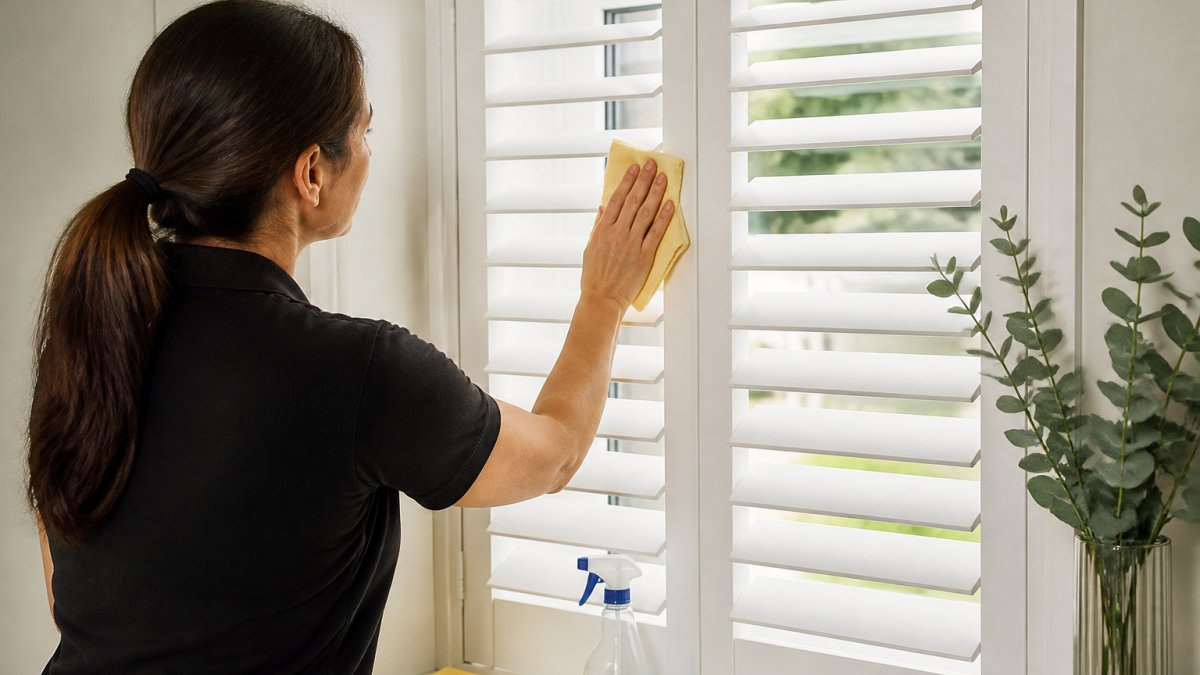
For PVC and composite shutters, the routine is simple. Use a soft-bristled brush or microfibre cloth monthly to remove dust. For deeper cleaning, mix warm water with a few drops of mild dish soap. Wipe the shutters with a damp cloth, then dry immediately with a clean towel. Avoid abrasive scrubbers that scratch the finish.
Hard water deposits appear as white or chalky buildup on shutters near the window. White vinegar cuts through these deposits. Spray diluted vinegar (one part vinegar to three parts water) on affected areas, let sit for five minutes, then wipe clean. This removes mineral deposits without damaging the material.
For wooden shutters, use a dry cloth primarily. Moisture is the enemy, so minimise wet cleaning. When you must clean wood shutters, use only a barely damp cloth and dry immediately. Never soak wood shutters or let water sit on them.
Mildew appears as dark spots or discoloration. If you spot mildew, address it immediately. Mix one part white vinegar with one part water and apply to affected areas. For stubborn growth, a mild bleach solution (one part bleach to ten parts water) works, but test on a hidden area first to ensure it doesn't discolour the finish. After treatment, ensure the bathroom has excellent ventilation to prevent recurrence.
Check seals and hinges annually. Moisture can seep into mechanical components. If hinges feel stiff or seals show gaps, contact your installer for adjustment. For Caledonia Shutters customers, our team can provide maintenance guidance specific to your shutter material and handle any adjustments needed.
Which Material Should You Choose for Your Bathroom?
The right choice depends on three factors: your budget, your aesthetic preferences, and how much maintenance you're willing to perform.
Choose PVC if: You need maximum moisture resistance with minimal maintenance and budget is your primary concern. PVC shutters are the most forgiving material for bathrooms. They require virtually no special care. For modern bathrooms or homes where traditional aesthetics matter less, PVC delivers excellent value.
Choose composite if: You want wood-like appearance with genuine durability. Composites balance aesthetics and performance. They require moderate maintenance, occasional cleaning and inspection, but far less than wood. For most homeowners seeking longevity and appearance together, composite shutters are the practical choice.
Choose wood only if: Your home is a period property where authenticity is non-negotiable, and you're prepared for ongoing maintenance. Wooden shutters in bathrooms demand regular inspection, periodic refinishing, and vigilant ventilation. The aesthetic reward justifies the effort for some homeowners, but it's not a low-maintenance choice.
Choose ABS polymer if: Maximum moisture protection is your priority and budget allows. ABS polymer offers high moisture resistance. It delivers exceptional durability in challenging bathroom environments.
When you're ready to install shutters in your bathroom, Caledonia Shutters provides made-to-measure solutions in all these materials. Our team helps you match material choice to your specific bathroom conditions, aesthetic goals, and maintenance preferences. We deliver across Scotland, from Glasgow to the Highlands and Islands, with the fastest lead times in the country.
Choosing the right shutter material for your bathroom is one of the most important decisions you'll make for your home's window treatments. The wrong choice means replacing shutters repeatedly or living with deteriorating shutters. The right material choice, whether PVC, composite, or another option, means shutters that look beautiful and function perfectly for decades. At Caledonia Shutters, we specialise in made-to-measure shutters tailored to your bathroom's specific moisture conditions and your design preferences. Our in-house team handles everything from design to installation, ensuring a perfect fit and professional finish. Book now to discuss which material suits your bathroom best.
Frequently Asked Questions
What is the best material for bathroom shutters?
The best shutter material for a humid bathroom depends on your priorities. Composite shutters and PVC offer excellent moisture resistance and require minimal maintenance. Wooden shutters add warmth and character but demand regular sealing and care. ABS polymer and aluminium-core composites provide exceptional durability. Consider your budget, aesthetic preference, and how much maintenance you're willing to commit to when choosing between these shutter materials for humid bathrooms.
Are PVC bathroom shutters suitable for humid bathrooms?
Yes, PVC shutters are well-suited to humid bathrooms. They are water-resistant and won't absorb moisture, making them a practical choice for environments with regular condensation and steam. PVC is also cost-effective and requires only occasional wiping to stay clean. However, PVC may not offer the aesthetic warmth of wood or composite options, so consider this when evaluating shutter materials for your bathroom space.
Can bathroom shutters get damaged by condensation?
Yes, some shutter materials are vulnerable to condensation damage. Natural wood can warp, swell, or rot if exposed to prolonged moisture without proper sealing. Composite shutters, PVC, and ABS polymer are far more resistant to condensation damage because they don't absorb water. To protect any shutter material, ensure good bathroom ventilation, wipe shutters regularly, and avoid allowing water to pool on surfaces. Proper maintenance significantly reduces the risk of moisture-related damage.
How do you clean moisture-resistant shutters?
Most moisture-resistant shutters like PVC and composite can be cleaned with a soft, damp cloth and mild soap. Wipe louvres gently from top to bottom, then dry with a clean cloth to prevent water spots. For stubborn grime, use a soft-bristled brush. Avoid harsh chemicals or abrasive materials that can scratch the finish. Regular cleaning prevents moisture and dust buildup, which helps maintain the shutters' appearance and performance in your humid bathroom.
What is the difference between PVC and composite shutters?
PVC shutters are made entirely from plastic and offer excellent water resistance at a lower cost. Composite shutters combine materials (often wood fibres with resin) to provide a more authentic wood appearance while maintaining moisture resistance. Composite shutters typically have a more polished, painted finish and may offer better aesthetics, though they can be slightly more expensive. Both perform well in humid bathrooms; choose based on your budget and desired look.
Book Now!

Comments