

Shutter Installation Process Explained for 2026
Last Updated: November 8, 2026
Quick Summary
Shutter installation is the fitting of made-to-measure panels into your window opening, following a clear route: survey, measurement, manufacture, then a fitting visit. At Caledonia Shutters, we run that route in-house from first design chat to final adjustment, and most of the work happens before fitting day.
A fitter surveys each window opening before anything is made, checking the reveal and obstructions.
Lead time is the wait from order to arrival; fitting time is the hours spent on site.
Clear windowsills, move furniture back and clear a route from the front door to each window.
Fitting is usually a few hours per window, so plan for noise, dust and limited room access.
Deep stone reveals and tight shared closes in Glasgow flats affect how a fitter works.
Ready to fit shutters in your home?
Caledonia Shutters makes and fits made-to-measure shutters across Scotland with fast lead times.
Table of Contents
What the Shutter Installation Process Involves
Shutter installation is the fitting of made-to-measure panels into your window opening, and it follows a clear route: survey, measurement, manufacture, then a fitting visit. At Caledonia Shutters, we run that route in-house from first design chat to final adjustment.
The shutter installation process explained here covers every stage, from the site survey to the last turn of a hinge screw.
From First Survey to Fitted Panels
A fitter surveys each window opening before anything is made. The survey checks the window reveal, the surrounding structure and how the frame will sit. Measurements then go to the workshop.
Survey: checks the opening, the reveal and any obstructions
Measure: records the clear opening for a made-to-measure fit
Make: builds panels, frame and filler strips to size
Fit: mounts the frame, hangs the panels, adjusts and checks
Most of the work happens before fitting day. The visit itself is the short part.
The process follows a clear route from first survey to fitted panels.
Stage | What happens |
Survey | Checks the opening, the reveal and any obstructions |
Measure | Records the clear opening for a made-to-measure fit |
Make | Builds panels, frame and filler strips to size |
Fit | Mounts the frame, hangs the panels, adjusts and checks |
How Long Does Shutter Installation Take?
Shutter installation takes a fitter's time on the day, while the full order-to-fitting timeline depends on the product and is confirmed when you book. The two are not the same thing, and mixing them up is the most common source of confusion.
Lead Time vs Fitting Time
Lead time is the wait from order to the day your shutters arrive. Fitting time is the hours a fitter spends on site. A short lead time does not mean a rushed fit, and a long lead time does not mean a better one.
Lead time: order, manufacture and delivery to your door
Fitting time: mounting, hanging and adjusting on the day
Ask any company for both figures in writing
Watch out: a quote that gives one number for "installation" without saying whether it means lead time or fitting time is worth questioning before you commit.
Made-to-Measure Shutters: Measuring and Fitting Explained
Made-to-measure shutters are built to the exact size of your window opening, so the measuring stage decides how well they fit. A fitter measures the clear opening, checks for square and level, and notes the window reveal depth. Any twist in an old frame gets recorded here.
Accuracy at this stage prevents gaps, rubbing panels and botched jobs. If you want to understand the tape-work itself, our guide on how to measure windows for shutters walks through it step by step.
Fitting then follows the measurements: the frame goes in first, filler strips close any gap to the surrounding structure, and the panels hang from there.
Shutter Installation Preparation: What to Do Before Fitting Day
Preparation before fitting day is simple: clear the room, move breakables, and give the fitter access to each window. Small rooms and tight hallways need a clear path for panels and tools. But a genuinely useful preparation section also covers the tools a fitter will use, the safety points that matter in an occupied home, and the cases where DIY fitting should not be attempted at all.
Room and access preparation
Clear windowsills and move furniture back from each window
Take down curtains, blinds and anything fixed to the wall nearby
Remove fragile items from the room
Arrange parking or access if you live in a flat
Keep children and pets out of the working area on the day
Clear a route from the front door to each window, including stairs and shared closes
A safe working area speeds the job up and protects your home. Fitters bring dust sheets, but a clear floor helps more than anything. In Glasgow tenements, the shared close and stairwell are often the tightest part of the job, so flag any narrow turns or locked entry doors when you book.
Tools and fixings a fitter will use
A professional fitting kit is modest but specific: a spirit level, a tape measure, a drill with masonry and wood bits, screwdrivers, a bradawl, a utility knife, a mitre saw or fine-tooth saw for filler strips, and a vacuum for dust. Fixings are chosen for the wall type, masonry plugs and screws for stone or brick reveals, timber fixings for studwork, and specialist anchors where the substrate is hollow or friable. Older Glasgow properties often have lath-and-plaster or hard stone surrounds, so the fitter may test the fixing point before committing.
Safety in an occupied home
Keep the work area clear of trailing cables and tools
Expect noise from drilling and sawing, especially in hard stone reveals
Ask the fitter to isolate the area if you have young children or pets
Confirm whether any powered roller shutter needs an electrical connection and who is responsible for it
Check that ladders or steps are stable and not placed on loose rugs or uneven floors
When not to DIY
Simple internal shutters in a square, sound opening can be within reach of a confident DIYer. The cases that call for a qualified installer are different: heavy or full-height panels, powered roller shutters that need a safe electrical supply, openings that are badly out of square, period or listed windows where fixing method matters, and upper-floor flats where access and panel handling are awkward. If any of those apply, a survey is cheaper than correcting a failed fit.
Disruption planning
Fitting is usually a few hours per window, so plan for noise, dust and limited access to the room rather than a full day of upheaval. Move furniture the day before, not on the morning, and keep a clear path for panels. If you work from home, book the quietest room away from the fitting.
A Plantation Shutter Installation Guide, Step by Step
A plantation shutter installation guide comes down to two stages: setting out and fixing the frame, then hanging and adjusting the panels. Here is the sequence a professional fitter follows.

Step 1: Check the Opening and Set Out the Frame
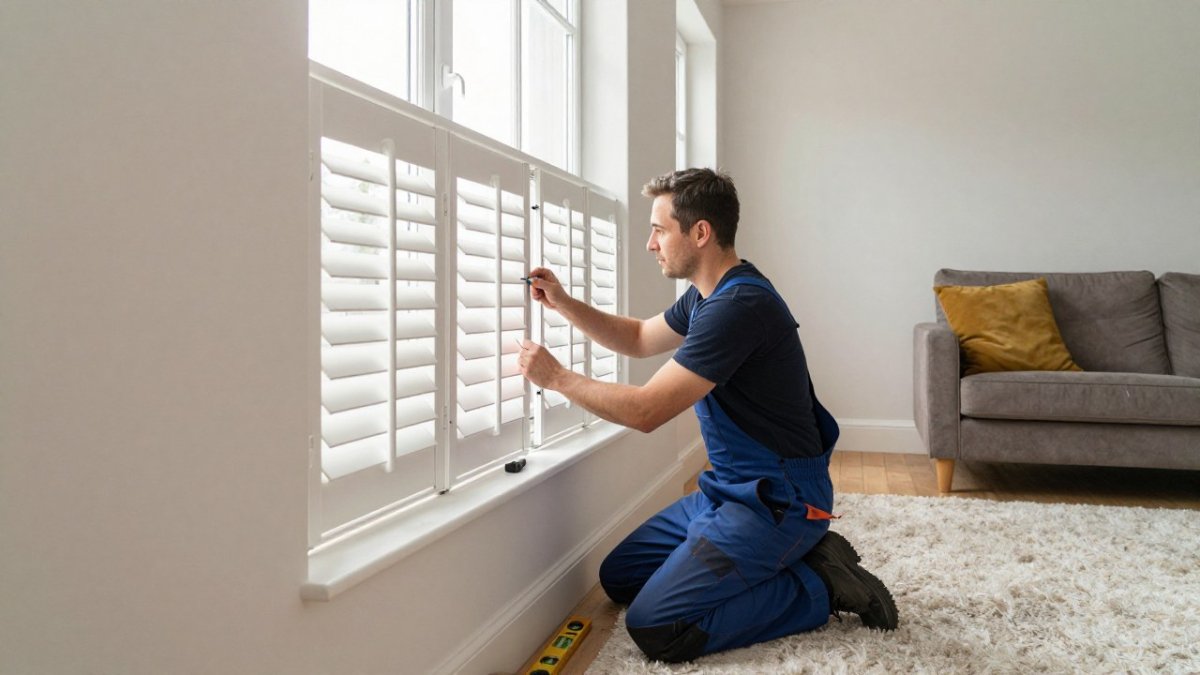
The fitter checks measurements against the window opening before fixing anything, then sets the frame level and plumb.
Step 2: Fix the Frame, Hang the Panels and Adjust
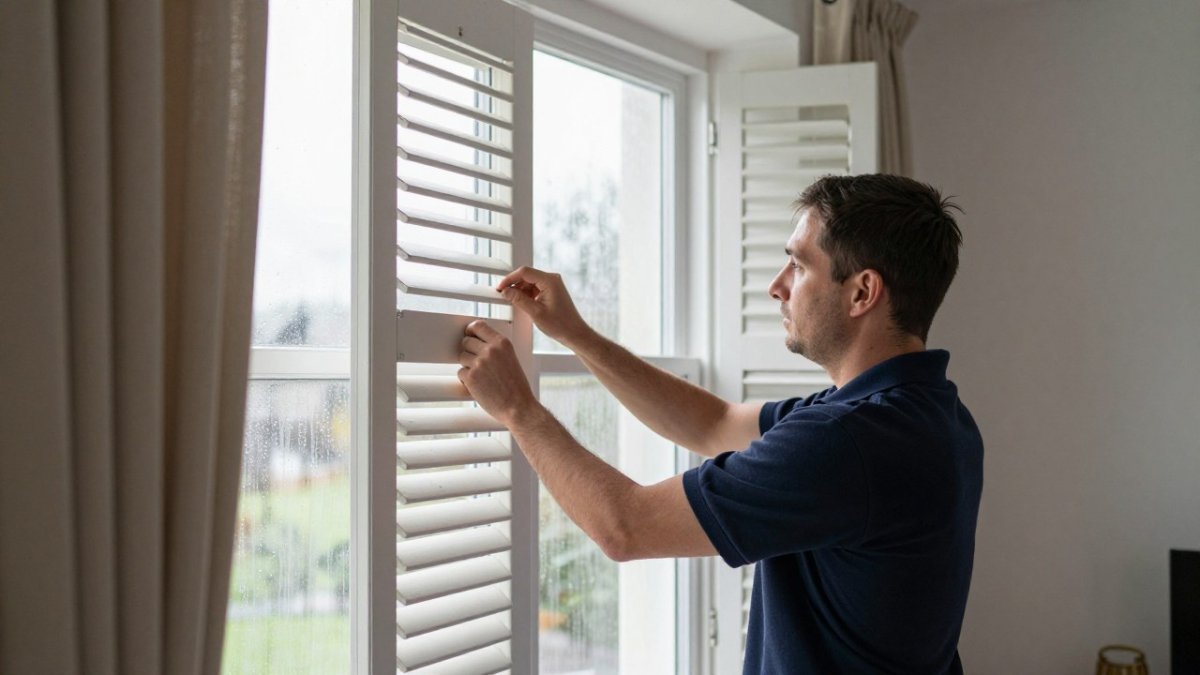
The frame is secured with fixings suited to the wall type, and panels are then hung and adjusted.
If your home has period windows, our fitting guide for internal shutters for Victorian windows covers the details that change.
Glasgow Flats and Tenements: What Changes at Fitting
Glasgow flats and tenements bring fitting quirks that a standard guide skips. Deep stone reveals, uneven plaster around old sash windows and shared closes with tight stairs all affect how a fitter works.
Deep window reveals need accurate frame depth measurements
Old walls may need different fixings
Tight stairs and shared entrances slow panel delivery to the room
Upper-floor flats may need access planning for larger panels
Our team covers Glasgow and can survey your home before anything is made. You can see our local service on the Glasgow internal shutters page.
What Shutter Installation Costs and What Changes the Price
Shutter installation pricing depends on quantity, dates, and delivery, so direct readers to the website pricing page or a quote for current prices. Our pricing is transparent and tailored to your budget, and you can find current prices on our pricing page or request a quote. What follows is the practical structure behind a quote, so you can compare like with like.
How a quote is usually built
Ask for the made-to-measure product, fitting and any extras to be itemised separately so you can compare like with like.
What moves the price most
Number and size of windows, the single biggest driver
Shutter style and material, hardwood, MDF and composite sit at different price points
Window shape, including awkward or period openings that need more workshop time
Access, such as upper floors, remote locations or tight shared closes
Fitting complexity in older properties, where reveals are uneven or fixings need testing
Lead time and fitting time are priced differently
Ask for the lead time and the on-site fitting estimate in writing, separately.
Questions to ask before you commit
For a closer look at where extra charges can creep in, read our guide to avoiding hidden costs in window shutters.
Book a Survey and Get Your Shutters Fitted
Booking a survey is the first real step, and it is where the process becomes specific to your home. A fitter visits, measures each opening, and confirms style and timeline with you.
Our in-house fitting teams cover all of Scotland, from city flats to remote Highland homes, and we handle design through to fitting.
Ready to move? Book a survey and get your shutters fitted with Caledonia Shutters.
Fitting shutters well comes down to accurate measuring, a proper survey and a fitter who adjusts the panels on the day. Caledonia Shutters brings made-to-measure shutters, fast lead times and in-house fitting teams to homes across Scotland. Get started with Caledonia Shutters and book your survey today.
Frequently Asked Questions
What happens during a window shutter installation?
A fitter surveys the window, confirms the measurements, and then fits the frame and panels. Most installations are completed in a single visit.
How long does shutter installation take, and how long is the wait between measuring and fitting?
Fitting takes a fitter's time on site, and the duration depends on the number of windows. The longer wait is the order-to-fitting timeline, because made-to-measure panels are manufactured after the survey. Ask for the lead time in writing at quote stage and keep it separate from the fitting time. You can find current pricing on the Caledonia Shutters website.
Can I install window shutters myself, or should I use a professional?
DIY installation is possible on a square, plumb opening with a standard recess and a fixing-friendly surface. It becomes risky in older Scottish properties where reveals are out of square, walls are lath and plaster, or the window is a tenement bay. Measuring errors on made-to-measure panels are costly to correct, and poor fixings can damage the surround.
What should I check after my shutters have been installed?
Ask for the warranty terms and aftercare instructions in writing, and report any sticking or misalignment straight away.
Comments