

How to Install Shutters in a Glasgow Listed Building 2026
Quick Summary
Installing listed building shutters usually needs listed building consent before work starts, especially if fixings disturb original joinery, reveals or stonework. Internal shutters fitted with reversible fixings are generally easier to justify, while external shutters face stricter scrutiny. Check with your local planning authority first.
Listed building consent is usually required before disturbing original fabric or changing a building's character.
Carrying out works to a listed building without required consent is a criminal offence in Scotland.
Internal shutters using existing fixing points are generally considered easier to justify than external ones.
Confirm listing grade with Historic Environment Scotland and conservation area status with your council.
Prepare photographs, measured drawings and fixing details before submitting a consent application.
Planning shutters for a listed home?
Caledonia Shutters offers made-to-measure internal shutters with in-house design and fitting across Scotland.
Table of Contents
Do You Need Consent to Install Shutters in a Listed Building?
Shutters in Conservation Areas: Planning Permission Explained
Step 2: Gather Evidence, Drawings and Photographs for Your Application
Step 3: Choose Reversible, Sympathetic Fixings for Historic Windows
Booking Your Glasgow Shutter Consultation with Caledonia Shutters
Do You Need Consent to Install Shutters in a Listed Building?
Installing listed building shutters often needs formal consent before any work starts. Caledonia Shutters, which fits internal shutters across Scotland, is often asked this question by homeowners with older properties. The short answer depends on whether the shutters are fixed to the building, how they are fitted, and where the property sits.
Last Updated: November 7, 2026
Listed buildings are protected because of their special architectural or historic interest. In Scotland, the rules sit within the Planning (Listed Buildings and Conservation Areas) (Scotland) Act 1997, and Historic Environment Scotland guidance on listed buildings.
What 'character' means when a conservation officer assesses your shutters
Listed building consent is not a rubber stamp for any change. The test is whether the work would affect the building's character as a structure of special architectural or historic interest. In practice, a conservation officer will look at four things:
Original fabric: whether the shutters or their fixings would cut, screw into or otherwise disturb original window joinery, reveals, plaster or stonework.
Visibility and setting: how much of the work would be seen from public views, and whether it would change the building's external appearance or its contribution to a terrace or street.
Reversibility: whether the shutters could later be removed and the original detail reinstated without lasting loss.
Cumulative effect: whether this is a one-off window or part of a pattern across a flat or tenement, since repeated small changes can add up to a material alteration.
Internal shutters fixed within the reveal, using existing fixing points and no new cutting of historic timber, are generally considered easier to justify. External shutters are assessed far more strictly because they change the façade itself.
Internal versus external shutters
Internal shutters are fitted inside the room, behind the window frame or within the reveal. External shutters sit on the outside of the building, where they are far more visible from the street.
Internal shutters are usually less visually intrusive, but they still alter fixings, reveals and window joinery.
External shutters affect the appearance of the façade, so they face stricter scrutiny.
Many homeowners assume internal fitting avoids consent for listed building shutters. That is not always true. Any work that disturbs original fabric can still need approval. A common pattern is that a shutter frame screwed into an original sash casing, or a new batten fixed into a historic reveal, is enough to trigger the consent question even when nothing is visible from outside.
Planning permission versus listed building consent
These two permissions are not the same. Planning permission deals with land use and development. Listed building consent deals with the historic character of the building itself.
A project can need one, both, or neither.
Watch out: carrying out works to a listed building without the required listed building consent is a criminal offence in Scotland, not simply a paperwork matter, and councils can serve enforcement notices requiring reversal.
How consent applications are assessed in Scotland
Your application is made to the local planning authority, in Glasgow, Glasgow City Council, and is usually decided by planning officials under delegated powers, with Historic Environment Scotland consulted on more significant cases. The officer will weigh your drawings, photographs and fixing details against the building's listed status and the local historic environment record. Decisions are not automatic and timescales vary, so build the application period into your project plan rather than ordering shutters first.
Shutters in Conservation Areas: Planning Permission Explained
A conservation area is a place of special architectural or historic interest, and it is not the same as a listed building. Shutters on an unlisted home inside a conservation area may still need planning permission, especially if they change the outside appearance.
What actually triggers the permission question
In a conservation area, the starting point is whether the work amounts to development, generally a material change to the external appearance of a building. Internal shutters that do not alter the outside of the property are usually outside planning control, though they may still need listed building consent if the building is listed. External shutters, new external frames, and changes to the front elevation are the cases most likely to need planning permission.
Conservation area status also brings extra controls that catch some homeowners by surprise:
Demolition: demolishing a building or structure in a conservation area generally needs conservation area consent, and the same caution applies to removing original features that contribute to character.
Trees: giving notice before felling or pruning trees in a conservation area is a separate requirement, relevant if planting or access work is planned.
Article 4 directions: some conservation areas have an Article 4 direction removing permitted development rights, which can bring normally exempt alterations, including some external fittings, into the planning system.
Glasgow-specific consent routes and contacts
In Glasgow, the planning authority is Glasgow City Council. The practical route is:
Check the designation: use Historic Environment Scotland's records to confirm whether the property is listed and at what grade (A, B or C in Scotland), then check Glasgow City Council's conservation area maps and appraisals for your street.
Read the local guidance: Glasgow's conservation area appraisals and any Article 4 directions set out what the council expects for windows, doors and external fittings in your area.
Contact the planning team: ask Glasgow City Council's planning service, and where available the conservation officer, to confirm in writing whether listed building consent, planning permission, or both are needed for your specific window type and fixing method.
Wait for written advice before ordering: a short pre-application enquiry is usually cheaper than reversing work later.
Watch out: work started without the correct permission can lead to enforcement action and orders to reverse the work, so confirm the position before fitting anything (Guide to conservation areas in Scotland).
What to submit and what happens if consent is refused
A strong application saves time. Prepare photographs of each window from inside and outside, measured drawings showing the shutter position and fixings, product specifications, and a short heritage impact statement explaining why the design is sympathetic and reversible. Officers assess the proposal against the building's character and the conservation area appraisal, not against a fixed national standard.
If consent is refused, or granted with conditions, you have options: amend the design and reapply, choose a more reversible internal fitting, or appeal the decision to the appropriate Scottish body within the stated period.
Step 1: Check Your Property's Listing and Local Rules
Before you plan any installation, confirm three things:
Listing status: Check whether the property is listed and at what grade (A, B or C in Scotland).
Conservation area status: Find out whether your street sits inside one.
Local rules: Ask the council which consents apply to your specific project.
Historic Environment Scotland keeps the national list, so start there (Listed buildings). Then contact your local planning authority to confirm what applies to your window type and fitting method.
Before planning any installation, the article suggests confirming three key points about your property:
Check | What to confirm | Where to start |
Listing status | Whether listed, and grade (A, B or C) | Historic Environment Scotland's national list |
Conservation area | Whether your street sits inside one | Local planning authority |
Local rules | Which consents apply to your window and fitting | Council planning team |
Step 2: Gather Evidence, Drawings and Photographs for Your Application
A strong application saves time. Prepare the following before you submit:
Photographs of each window from inside and outside, showing the frame, reveal and surrounding detail
Measured drawings showing the shutter position, fixings and any changes to the reveal
A short description of the materials and finish you plan to use
A note on how the shutters can be removed without lasting damage
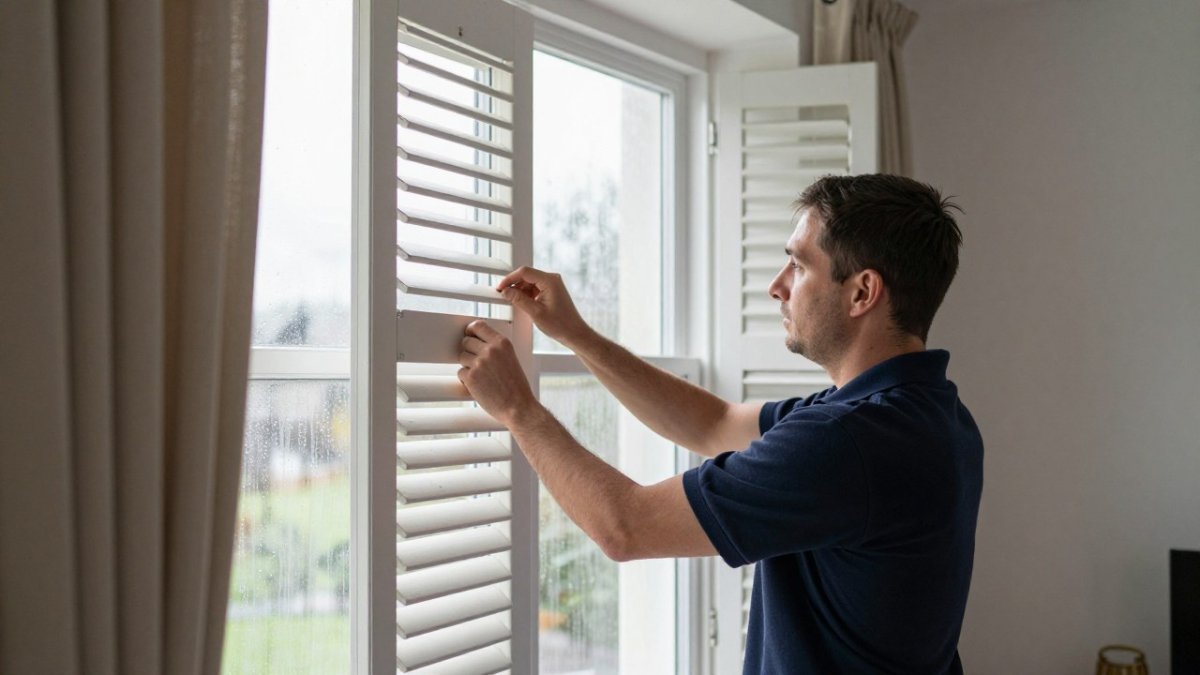
A homeowner measuring a tall sash window in a Glasgow stairwell is a good example of the kind of evidence to gather. Clear records help officers assess the impact on the building.

Step 3: Choose Reversible, Sympathetic Fixings for Historic Windows
Historic windows need careful handling. Choose fixings that do not cut into original timber or stone where possible. Reversible methods are usually easier to approve because they can be removed without permanent loss.
Use existing fixing points where the building allows.
Avoid drilling into decorative mouldings or original joinery.
Pick finishes that match the existing window colour.
Ask the conservation officer which fixings they usually accept.
Installation details matter as much as the shutter itself. A poor fitting can damage a sash window, cause draughts, or stop the window opening properly.
Plantation Shutters for Sash Windows: Fit, Frame and Reveal
Plantation shutters are a popular choice for sash windows because they fold neatly and suit traditional interiors. Fitting them to a sash window means working around the meeting rail, the sash cords and the window reveal.
Measure the reveal depth carefully and allow room for the sash to move. Check that the shutter frame does not restrict the window from opening. Browse the plantation shutter range to see styles suited to sash windows.
For a deeper look at this window type, read our internal shutters guide for sash and case windows.
Booking Your Glasgow Shutter Consultation with Caledonia Shutters
Once your consent position is clear, the next step is a practical site visit. Caledonia Shutters offers made-to-measure internal shutters across Glasgow and the rest of Scotland, with in-house design and fitting.
Check our internal shutters price guide for Scottish homes to understand the investment before you book. Pricing depends on window size, shutter style and quantity, so the Caledonia Shutters website shows current figures.
Ready to plan your listed building project? Book your Glasgow shutter consultation with Caledonia Shutters today.
Frequently Asked Questions
Do I need listed building consent to install internal shutters in Glasgow?
In most cases, yes. Under Scottish heritage law, fitting shutters to a listed building that affects its character usually needs listed building consent from the local planning authority, Glasgow City Council, before work starts. Internal shutters are not automatically exempt, because they can alter original joinery, window reveals and architraves. Contact the council's planning team or heritage officer before you order, confirm whether your intended works need consent, and keep written confirmation for your records. Work done without required consent can be enforced against, so it is worth checking first.
Do shutters need planning permission in a conservation area?
Not always. Within a conservation area, some external alterations may need planning permission, while internal shutters in an unlisted property generally do not. Rules change depending on the building, its use and any Article 4 direction that removes permitted development rights. Check with Glasgow City Council before installing external shutters or changing a street-facing window. A short written enquiry is usually the quickest way to get a clear answer for your specific property.
Can I install plantation shutters in a listed building?
You can, but you will normally need listed building consent first. Plantation shutters on sash windows usually require careful measuring of the frame, reveal and meeting rails so the fitting does not damage original timber. Choose a design that suits the period of the property, and ask the council whether the proposal affects the building's special interest. Pricing depends on quantity, dimensions and delivery, so request a quote from our website.
Who should I contact before installing shutters in a listed building in Glasgow?
Start with the planning team at Glasgow City Council, which handles listed building consent applications and can advise whether a conservation officer should review your proposal. Ask about the application process, what drawings are required and how long assessment usually takes. Bring photographs of the existing windows and a clear description of the shutter type and fixings. Keep all correspondence, as it can support any future sale or insurance query about the property.

Comments